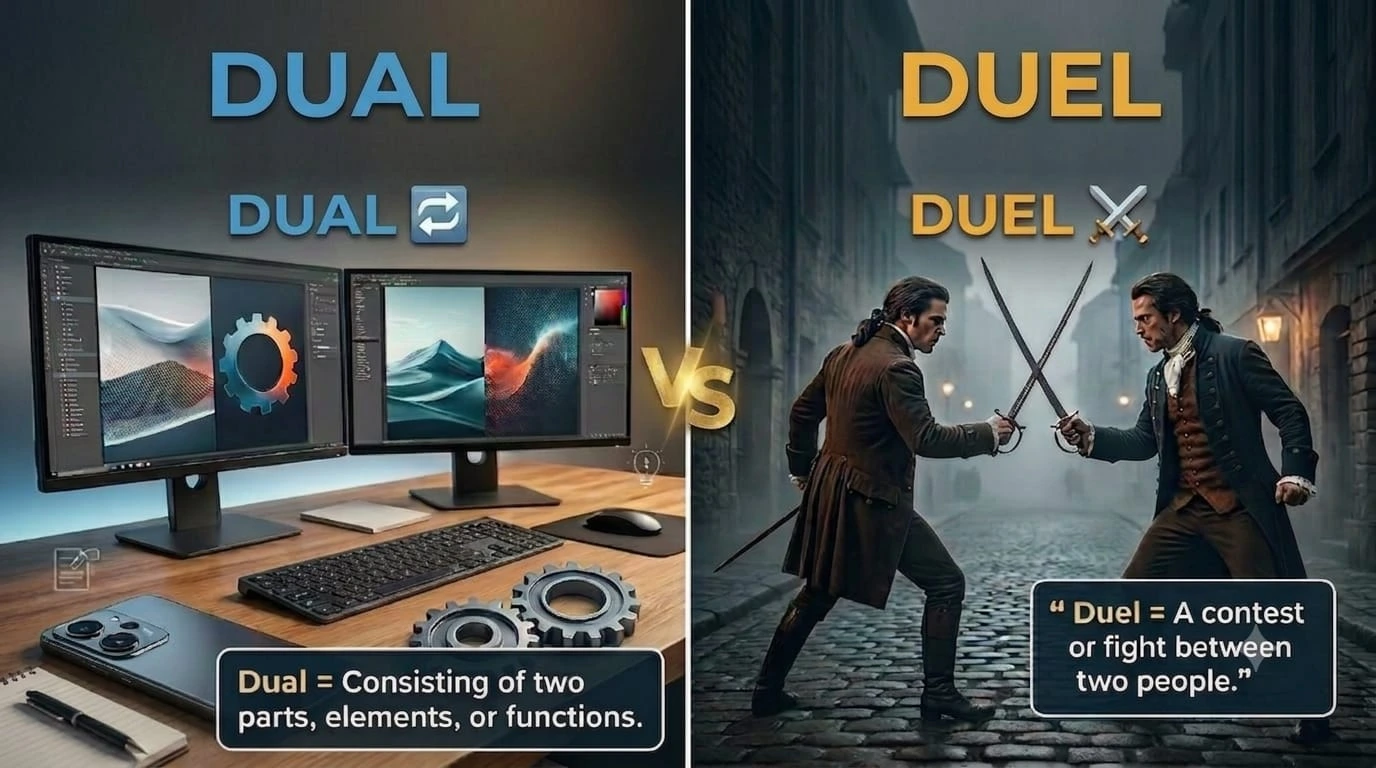
Dual means having two parts, functions, or features, while duel means a fight or competition between two people.
Have you ever written a sentence and stopped for a second because something looked strange? Maybe you typed dual when you meant duel. Or perhaps you used duel when talking about two features on a phone. It happens often because these two words sound exactly the same.
People search for dual or duel because they want a fast answer. The words are easy to mix up because they are pronounced the same way. Yet they have completely different meanings. One word talks about two things working together. The other describes a fight or competition between two people.
This confusion appears in school work, emails, social media posts, business writing, and everyday conversations. A small spelling mistake can change the whole meaning of a sentence. That can make your writing unclear.
This guide gives you a quick answer first. Then you will learn the meaning, origin, examples, common mistakes, and simple tips to remember the difference forever.
Dual or Duel: Quick Answer
The difference is simple:
Dual = having two parts, functions, or features
Duel = a fight, contest, or competition between two people
Examples:
- My phone has dual cameras.
- The knights fought a duel.
Easy memory trick:
- Dual → Double → Two
- Duel → Battle between two people
The Origin of Dual or Duel
Even though these words sound alike, they come from different origins.
Dual comes from Latin roots linked to the number two. It developed into a word that describes something with two parts or purposes.
Duel came from older Latin and French words connected to war and fighting. It later became a word for formal combat between two people.
The spelling differences exist because the words grew from separate language roots.
| Word | Original Idea | Modern Meaning |
| Dual | Two | Having two parts |
| Duel | Combat | Fight or contest |
British English vs American English Spelling
Unlike some words, dual and duel do not change spelling between British and American English.
Both countries use the same spellings.
| British English | American English | Meaning |
| Dual | Dual | Two parts |
| Duel | Duel | Competition or fight |
Examples:
British English
- The device supports dual functions.
- The athletes entered a duel.
American English
- The phone uses dual speakers.
- Fans watched the final duel.
Which Spelling Should You Use?
Your choice depends on meaning.
Use dual if you are talking about:
- Two features
- Two functions
- Two roles
- Two connected parts
Examples:
- Dual monitor setup
- Dual purpose machine
Use duel if you are talking about:
- Competition
- Fighting
- Sports battles
- Historical combat
Examples:
- Sword duel
- Final duel
Audience advice:
US audience
Use standard meanings.
UK/Commonwealth audience
Use the same standard meanings.
Global audience
Keep meanings simple and clear.
Common Mistakes with Dual or Duel
People often switch these words.
| Wrong Sentence | Correct Sentence |
| The players entered a dual. | The players entered a duel. |
| This phone has duel cameras. | This phone has dual cameras. |
| The fighters started a dual. | The fighters started a duel. |
| She has a duel role. | She has a dual role. |
Reasons these mistakes happen:
- Same pronunciation
- Similar spelling
- Typing too fast
- Auto-correct issues
Dual or Duel in Everyday Examples
Emails
Dual
- Our software now supports dual user access.
Duel
- The event included a gaming duel.
News
Dual
- The company released a dual screen laptop.
Duel
- The championship duel attracted thousands of fans.
Social Media
Dual
- Just bought a phone with dual cameras.
Duel
- Tonight’s football duel will be exciting.
Formal Writing
Dual
- The organization adopted a dual strategy.
Duel
- Historical records describe the famous duel.
Dual or Duel: Google Trends & Usage Data
Search interest for dual or duel usually comes from people trying to avoid writing mistakes.
Common usage patterns:
- Dual appears more in technology and business topics.
- Duel appears more in sports, history, and gaming content.
- English learners frequently search for this keyword.
- Countries with large English-speaking populations often search for these terms.
Usage table:
| Word | Common Topics |
| Dual | Technology, business, devices |
| Duel | Sports, gaming, history |
Dual or Duel Comparison Table
| Feature | Dual | Duel |
| Meaning | Two parts | Fight or contest |
| Main Use | Features and functions | Competition |
| Common Topic | Technology | Sports and history |
| Example | Dual cameras | Sword duel |
| Memory Trick | Double | Battle |
FAQs
1. What does dual mean?
Dual means something has two parts, functions, or uses.
2. What does duel mean?
Duel means a fight or contest between two people.
3. Why do people confuse dual and duel?
People confuse them because they sound exactly the same.
4. Which word is used for smartphones?
Dual is correct because phones can have dual cameras or dual SIM support.
5. Is duel only used for fighting?
No. Duel can also describe sports or gaming competitions.
6. Is dual used in formal writing?
Yes. It is common in business and technical writing.
7. Which spelling is correct: dual role or duel role?
Dual role is correct because it describes two responsibilities.
Conclusion
The difference between dual and duel becomes easy when you focus on meaning. Dual refers to two parts working together. Duel refers to two sides competing against each other. Although these words sound identical, they serve very different purposes in writing.
A simple memory trick can help. Think of dual as double because both connect to the number two. Think of duel as a battle because it involves competition. Small reminders like this can help you avoid mistakes.
Students, writers, professionals, and content creators often confuse these words because pronunciation gives no clue about spelling. Choosing the wrong word can change the meaning of a sentence and confuse readers.
Now you know exactly how to use dual or duel correctly. Save this guide and use it whenever you need a quick reminder.
Doughnuts or Donuts? Which Spelling Is Correct? ✅

As an English language enthusiast, I love diving into the tricky details of word differences and spelling variations. My mission is to explain confusing terms and make them accessible to everyone, helping readers to communicate with clarity and confidence.