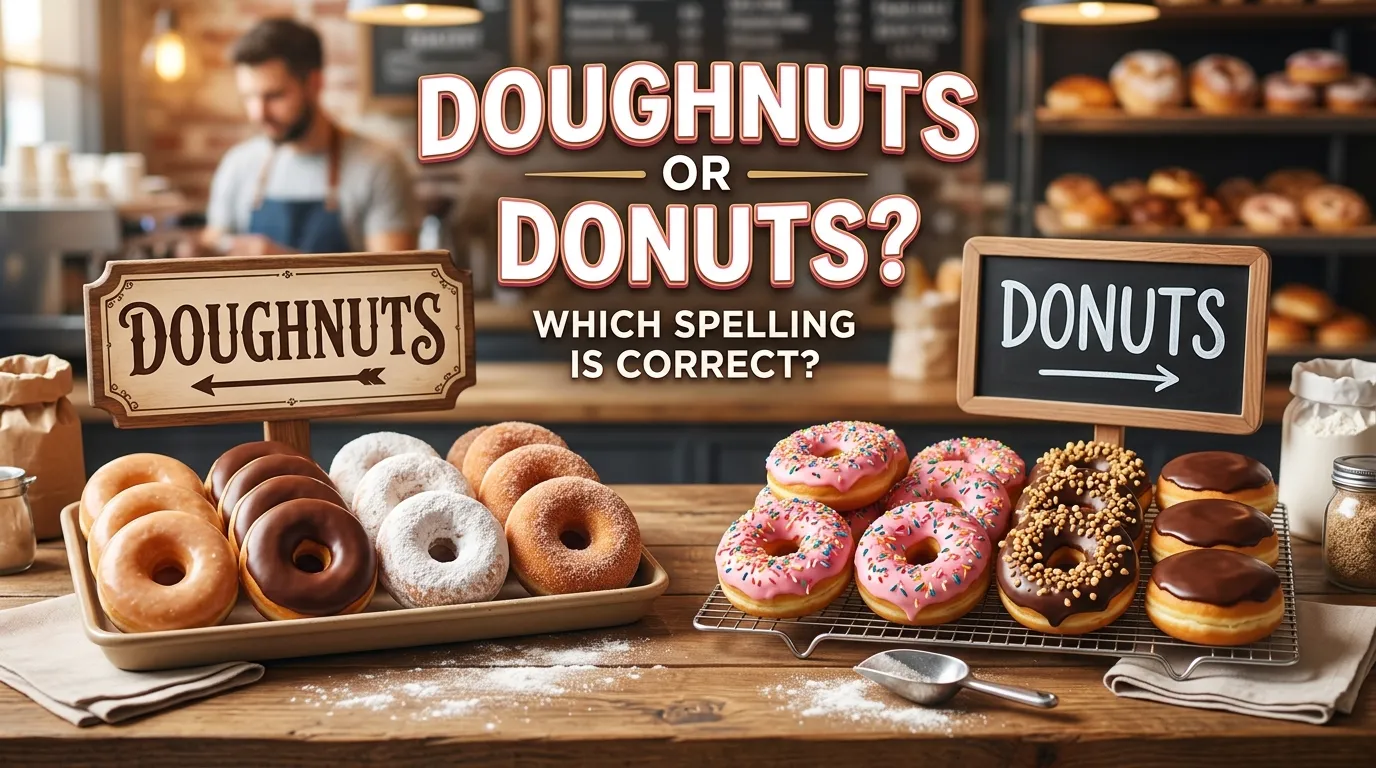
Both “doughnuts” and “donuts” are correct, but “donuts” is more common in modern American English and branding.
You’re craving a sweet treat and search online for a nearby bakery. One website advertises fresh doughnuts, while another proudly sells homemade donuts. The pictures look identical, the products are the same, yet the spelling is different. So which one is correct: doughnuts or donuts?
This is one of the most searched food-related spelling questions because both words are widely used in English. Unlike many spelling debates where one version is clearly wrong, doughnuts and donuts are both accepted spellings of the same delicious fried pastry.
People search for “doughnuts or donuts” because they want to know:
- which spelling is correct
- whether one is American or British
- which spelling businesses prefer
- which version should be used in formal writing
- why famous brands often use “donuts”
The good news is simple:
👉 Doughnuts is the traditional spelling.
👉 Donuts is the shorter modern spelling.
Both refer to the same food, and the choice usually depends on audience, style, and context.
In this guide, you’ll learn the origins, meanings, spelling differences, usage examples, comparison tables, common mistakes, and practical advice for choosing between doughnuts and donuts.
Doughnuts or Donuts – Quick Answer
👉 Doughnuts = Traditional spelling 🍩
👉 Donuts = Modern simplified spelling 🍩
Examples
- I bought a dozen doughnuts. ✅
- I bought a dozen donuts. ✅
Both sentences are correct.
Simple Rule
👉 Formal or traditional writing = Doughnuts
👉 Modern, casual, and commercial usage = Donuts
The Origin of Doughnuts or Donuts
The word originally developed from two words:
👉 dough + nut
Early versions of the pastry were often shaped differently than modern ring-shaped treats. The original name described small fried pieces of dough.
Over time, the term became:
👉 doughnut
As English evolved and businesses sought shorter, easier spellings, the simplified form:
👉 donut
became increasingly popular.
Today, both spellings are recognized by major dictionaries.
Doughnuts vs Donuts – Meaning Explained
What Does “Doughnuts” Mean?
“Doughnuts” is the traditional plural form of doughnut.
It refers to:
- fried sweet pastries
- ring-shaped treats
- filled pastries with jam, cream, or custard
Examples
- The bakery sells fresh doughnuts every morning.
- Chocolate doughnuts are my favorite.
- She brought doughnuts to the office.
What Does “Donuts” Mean?
“Donuts” means exactly the same thing.
It is simply a shorter spelling of doughnuts.
Examples
- We ordered a box of donuts.
- The shop specializes in gourmet donuts.
- Kids love colorful donuts.
British English vs American English Spelling
Regional preferences influence which spelling appears more often.
General Trend
| Spelling | UK Usage | US Usage |
|---|---|---|
| Doughnuts | Very common | Common |
| Donuts | Common | Very common |
Key Observation
👉 British English generally favors doughnuts.
👉 American English increasingly favors donuts.
However, both spellings are understood worldwide.
Which Spelling Should You Use?
The best choice depends on your audience.
Use “Doughnuts” When:
- writing formally
- using traditional English style
- writing academic content
- targeting British audiences
- following traditional dictionaries
Use “Donuts” When:
- writing casually
- targeting American readers
- creating marketing content
- using modern branding
- posting on social media
Simple Rule
👉 Traditional style = Doughnuts
👉 Modern style = Donuts
Common Mistakes with Doughnuts or Donuts
Mistake 1
❌ Thinking one spelling is wrong.
✔ Both are correct.
Mistake 2
❌ Assuming donuts and doughnuts are different foods.
✔ They refer to the same pastry.
Mistake 3
❌ Mixing styles within the same article.
✔ Choose one spelling and stay consistent.
Mistake 4
❌ Believing donuts is slang.
✔ Donuts is now an accepted dictionary spelling.
Doughnuts or Donuts in Everyday Examples
At a Bakery
- Fresh doughnuts are available daily.
- Today’s special includes glazed donuts.
At Work
- Someone brought doughnuts to the meeting.
- Free donuts were waiting in the break room.
Social Media
- “These donuts look amazing! 🍩”
- “Sunday morning doughnuts and coffee.”
Family Gatherings
- The kids ate all the doughnuts.
- We picked up donuts on the way home.
Doughnuts or Donuts – Google Trends & Usage Data
Modern search data shows:
👉 Donuts is searched more frequently overall.
This popularity comes from:
- shorter spelling
- major brand usage
- modern American English influence
Meanwhile:
👉 Doughnuts remains popular in traditional and international usage.
Key Insight
The modern internet strongly favors donuts, especially in marketing and food-related content.
Comparison Table: Doughnuts vs Donuts
| Feature | Doughnuts | Donuts |
|---|---|---|
| Correct spelling | Yes | Yes |
| Traditional spelling | Yes | No |
| Modern spelling | No | Yes |
| British preference | Stronger | Weaker |
| American preference | Common | Stronger |
| Same meaning | Yes | Yes |
Why Many Businesses Use “Donuts”
Many companies prefer donuts because it is:
- shorter
- easier to read
- easier to remember
- more visually appealing in branding
The simplified spelling fits well on:
- signs
- menus
- packaging
- advertisements
This helped make “donuts” extremely popular.
Why “Doughnuts” Still Remains Popular
Despite the rise of “donuts,” many writers and publications continue using doughnuts because it:
- reflects the word’s origin
- appears more traditional
- aligns with classic dictionary spelling
- remains common in British English
Many newspapers and style guides still prefer it.
Doughnuts and Donuts in Popular Culture
The word appears frequently in:
- movies
- TV shows
- advertisements
- food blogs
- social media
Common Examples
- glazed donuts
- chocolate doughnuts
- jelly-filled doughnuts
- gourmet donuts
Most readers instantly recognize both spellings.
Why This Confuses English Learners
The confusion happens because:
- both spellings are correct
- dictionaries list both forms
- brands often choose “donuts”
- traditional writing often uses “doughnuts”
Many learners assume one spelling must be wrong, but both are accepted.
Simple Trick to Remember the Difference
Easy Memory Rule
👉 Doughnuts = traditional 🍩
👉 Donuts = modern 🍩
Quick Reminder
If you’re writing formally:
✔ doughnuts
If you’re writing casually:
✔ donuts
FAQs
1. Is it doughnuts or donuts?
Both spellings are correct.
2. Which spelling is more common?
Donuts is more common in modern American English and branding.
3. Is donuts a real word?
Yes. It is a recognized dictionary spelling.
4. Is doughnuts the original spelling?
Yes. Doughnuts is the traditional form.
5. Do doughnuts and donuts mean different foods?
No. They refer to the same pastry.
6. Which spelling should I use in formal writing?
Doughnuts is often preferred in traditional formal writing.
7. What is the easiest way to remember the difference?
Doughnuts is traditional, while donuts is the modern simplified version.
Conclusion
The confusion between doughnuts or donuts exists because English accepts both spellings of the same delicious pastry. Unlike many spelling debates, there is no right-versus-wrong answer here.
Doughnuts is the original and more traditional spelling. It remains popular in formal writing, traditional publications, and many international English contexts.
Donuts is the modern simplified version. It has become extremely common in advertising, branding, social media, and everyday American English.
The easiest way to remember is:
👉 Doughnuts = traditional 🍩
👉 Donuts = modern 🍩
No matter which spelling you choose, the meaning stays exactly the same. The most important thing is consistency. Pick one version that matches your audience and use it throughout your writing.

Hi, I’m Evelyn Hartley. I love writing short stories that explore everyday life and the little emotions we all feel. I try to keep my words simple but meaningful, so readers can really connect with them.