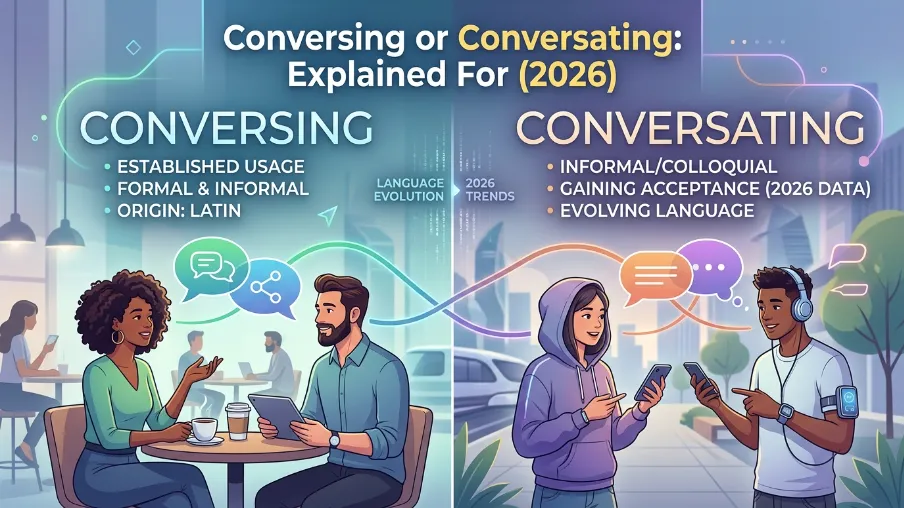
“Conversing” is the standard correct word in formal English, while “conversating” is informal slang used mostly in casual speech.
You hear someone say, “We were conversating all night,” and suddenly wonder: is that actually correct English? Should it be conversing instead of conversating?
This confusion has become very common because both words are now widely heard online, in music, social media videos, podcasts, and everyday conversations. Many people grow up hearing “conversating,” while schools and grammar tools usually prefer “conversing.”
People search for “conversing or conversating” because they want to know:
- which word is grammatically correct
- whether “conversating” is real English
- which version sounds professional
- what should be used in writing and speaking
The good news is simple:
👉 conversing is the standard traditional English form
👉 conversating exists in informal speech but is often considered nonstandard
However, language changes over time, and modern usage has made the topic more interesting than many people realize.
In this guide, you’ll learn the meanings, origins, examples, grammar differences, common mistakes, comparison tables, and practical advice for correctly using conversing and conversating.
Conversing or Conversating – Quick Answer
👉 Conversing = Standard correct English ✅
👉 Conversating = Informal/nonstandard variation ⚠️
Examples:
- We were conversing for hours. ✅
- They were conversating online. ⚠️ informal
Simple Rule:
👉 Professional or formal English = Conversing
👉 Casual slang or informal speech = Conversating
The Origin of Conversing or Conversating
Origin of “Conversing”
The word conversing comes from:
👉 converse
“Converse” has existed in English for centuries and means:
- to talk
- to communicate
- to exchange ideas
Examples:
- They conversed politely.
- We spent hours conversing.
Origin of “Conversating”
“Conversating” appeared later in informal spoken English.
It developed because many English verbs naturally end in:
- “-ate”
- “-ating”
Examples:
- communicate
- celebrate
- participate
Some speakers began forming:
👉 converse → conversate → conversating
Although widely used in casual speech, many dictionaries still label it:
- informal
- nonstandard
- slang
Conversing vs Conversating – Meaning Explained
What Does “Conversing” Mean?
“Conversing” means:
- talking together
- communicating
- exchanging ideas
It is considered:
✔ grammatically standard
✔ appropriate in professional writing
Examples:
- We were conversing during dinner.
- The guests enjoyed conversing.
- She was conversing with coworkers.
What Does “Conversating” Mean?
“Conversating” usually means the same thing:
👉 talking or chatting
However, it is often viewed as:
- informal
- slang-like
- conversational speech
Examples:
- They were conversating after class.
- We stayed up conversating all night.
British English vs American English Usage
Both British and American English strongly prefer:
👉 conversing
“Conversating” is heard more often in:
- informal American speech
- pop culture
- internet language
- music lyrics
Comparison Table
| Word | Formal English | Informal Speech |
|---|---|---|
| Conversing | Yes | Yes |
| Conversating | Rarely | Common in slang |
Which Word Should You Use?
Use “Conversing” When:
- writing professionally
- speaking formally
- creating academic content
- sending business emails
- using standard grammar
Use “Conversating” When:
- quoting casual speech
- writing dialogue
- using playful informal language
Simple Rule:
👉 Correct standard English = Conversing
👉 Casual slang = Conversating
Common Mistakes with Conversing or Conversating
Mistake 1
❌ Thinking “conversating” is formal English
✔ “Conversing” is the preferred standard form
Mistake 2
❌ Using “conversating” in academic writing
✔ Formal writing usually prefers “conversing”
Mistake 3
❌ Believing “conversating” is brand-new slang
✔ The word has existed informally for many years
Mistake 4
❌ Assuming both have different meanings
✔ Both generally mean talking or communicating
Conversing or Conversating in Everyday Examples
Workplace
- Employees were conversing during lunch.
- Staff members discussed ideas professionally.
Friends and Social Life
- We spent hours conversating online.
- Friends were conversing at the café.
Social Media
- “Just conversating with my bestie 😂”
- “We were conversing about life.”
Academic Writing
- Scholars were conversing about philosophy.
- Formal articles usually avoid “conversating.”
Conversing or Conversating – Google Trends & Usage Data
Search patterns show:
- “Conversing” dominates in formal writing and dictionaries
- “Conversating” trends strongly in:
- music
- social media
- internet culture
- spoken conversation
Key Insight:
👉 “Conversating” is popular in speech, but “conversing” remains the standard formal choice.
Comparison Table: Conversing vs Conversating
| Feature | Conversing | Conversating |
|---|---|---|
| Standard English | Yes | Usually no |
| Formal writing | Yes | Avoid |
| Informal speech | Yes | Common |
| Dictionary acceptance | Strong | Limited/informal |
| Meaning | Talking | Talking |
Why “Conversating” Became Popular
Many people naturally create verb patterns in English.
Examples:
| Standard Verb | Similar Ending |
|---|---|
| Communicating | -ating |
| Participating | -ating |
| Conversating | Similar pattern |
Because of these patterns, “conversating” sounds natural to many speakers even though traditional grammar prefers “conversing.”
Conversing vs Conversating in Pop Culture
“Conversating” appears often in:
- songs
- movies
- podcasts
- online videos
- casual internet language
This widespread exposure has helped the word become more recognizable.
Why This Topic Causes Debate
Some people believe:
👉 only “conversing” is correct
Others argue:
👉 language evolves naturally
Modern dictionaries may acknowledge “conversate” or “conversating” as informal usage, but professional writing still strongly favors “conversing.”
Simple Trick to Remember the Difference
Easy Memory Rule
👉 Conversing = standard English 📚
👉 Conversating = casual slang 🎤
Quick Reminder
If writing professionally:
✔ conversing
If speaking casually with friends:
✔ either may appear
FAQs
1. Is it conversing or conversating?
“Conversing” is the standard correct form in formal English.
2. Is conversating a real word?
It exists in informal speech, but many consider it nonstandard.
3. Which word should I use professionally?
Use “conversing.”
4. Why do people say conversating?
Because it sounds natural alongside similar English verb patterns.
5. Is conversating grammatically wrong?
Many grammar guides discourage it in formal writing.
6. Do both words mean the same thing?
Yes. Both refer to talking or communicating.
7. Can I use conversating casually?
Yes. It commonly appears in informal speech and online conversations.
Conclusion
The confusion between conversing or conversating happens because language constantly evolves through everyday speech, music, media, and internet culture. While both words are used to describe talking or communicating, they are viewed differently in formal English.
“Conversing” is the traditional and grammatically preferred form used in:
- professional communication
- academic writing
- formal speech
- standard English grammar
“Conversating,” however, is mainly considered:
- informal
- conversational
- slang-like
Even though many people use it casually, formal writing still strongly favors “conversing.”
The easiest way to remember is:
👉 Conversing = professional and standard 📚
👉 Conversating = casual and informal 🎤
Understanding this difference helps improve clarity and professionalism in writing while also recognizing how modern spoken English continues to evolve.

Hi, I’m Evelyn Hartley. I love writing short stories that explore everyday life and the little emotions we all feel. I try to keep my words simple but meaningful, so readers can really connect with them.