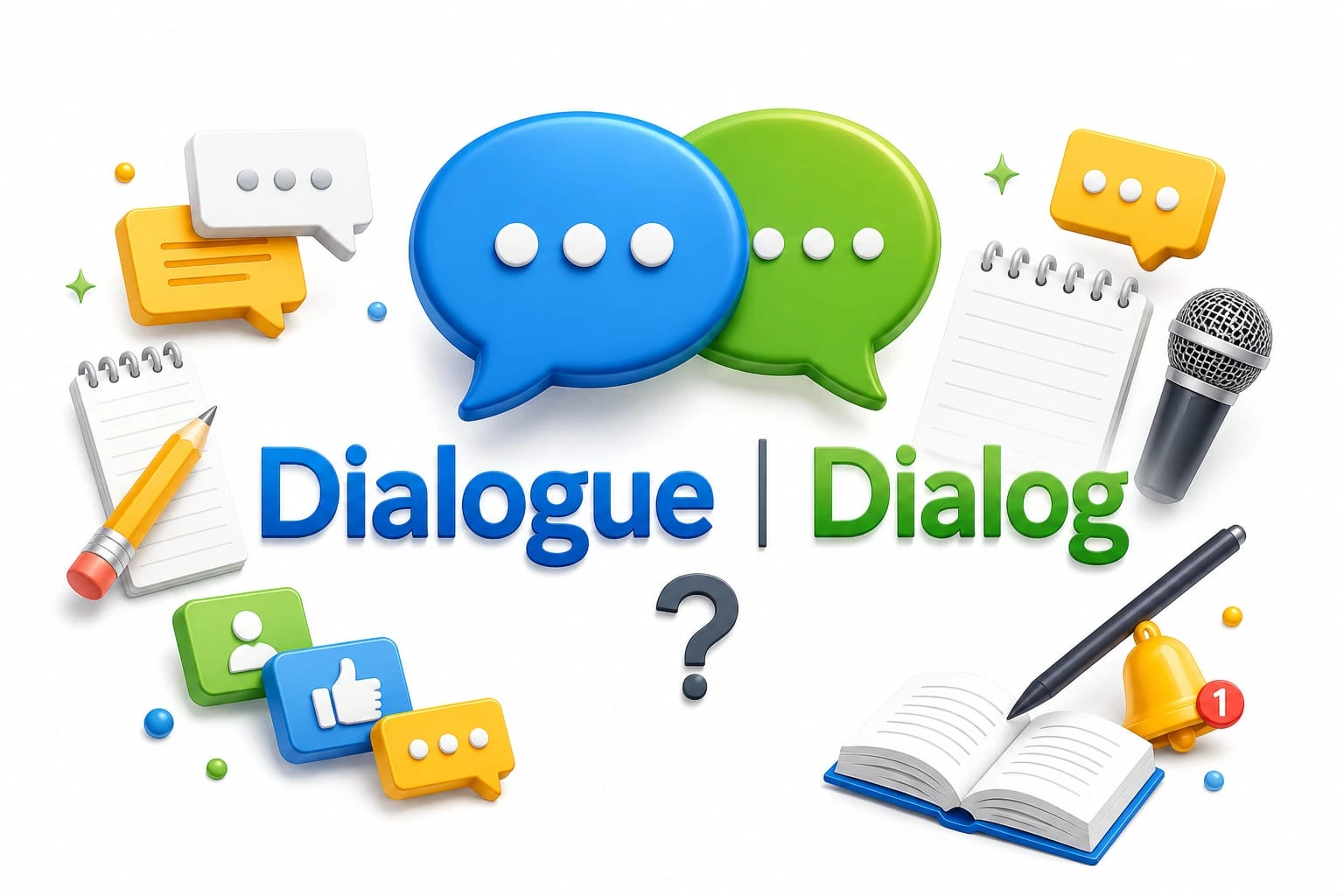
Both dialogue and dialog are correct, but they are used in different contexts. Dialogue is the standard spelling for general writing in British English and most American English, while dialog is mainly used in software, programming, and technical documentation.
Have you ever paused while writing and wondered whether dialogue or dialog is the correct spelling? You’re not alone. Many writers, students, bloggers, and professionals see both versions online and aren’t sure which one they should use. The confusion grows because dialogue is common in books, movies, and everyday writing, while dialog often appears in software, programming, and technology.
The good news is that both spellings are correct, but they are used in different contexts. In most cases, dialogue is the standard spelling accepted in British English and preferred in general American writing. Dialog, however, is mainly used in technical fields, especially when referring to software interfaces like a dialog box.
This guide will explain the difference between dialogue or dialog in simple language. You’ll learn their origins, British and American spelling rules, real-life examples, common mistakes to avoid, and which version is best for your audience. By the end, you’ll know exactly which spelling to choose with confidence, whether you’re writing an email, a novel, a blog post, or technical documentation.
Short answer: If you’re writing essays, articles, books, emails, or professional content, dialogue is usually the safest choice.
What Is the Difference Between Dialogue and Dialog?
The difference is mostly about spelling, region, and context, not meaning.
Both words refer to:
- A conversation between two or more people.
- Spoken lines in books, movies, or plays.
- Communication between individuals, groups, or countries.
However, their usage differs.
| Feature | Dialogue | Dialog |
|---|---|---|
| Standard English | ✅ Yes | Less common |
| British English | Preferred | Rare |
| American English | Preferred in general writing | Mostly technical |
| Software & UI | Sometimes | Common |
| Literature | Preferred | Rare |
The Origin of Dialogue or Dialog
The word comes from the Greek word dialogos, meaning conversation or discussion.
It later passed through Latin (dialogus) and then into Old French (dialogue) before becoming part of English.
Originally, English only used dialogue.
The shorter spelling dialog appeared much later, mainly in American English during the 19th century. It became more popular in the computer industry because shorter spellings fit well in software menus and technical documentation.
Today:
- Dialogue remains the traditional spelling.
- Dialog survives mostly in computing and software development.
British English vs American English Spelling
Many English words have different spellings depending on the country.
Dialogue and dialog follow a similar pattern.
British English
British English almost always uses:
✅ Dialogue
Examples:
- The dialogue between the characters felt natural.
- Peaceful dialogue is important.
American English
American English usually also prefers:
✅ Dialogue
However, in technology, software, and programming, Americans often use:
✅ Dialog
Examples:
- Open the Settings dialog.
- Save dialog box.
Dialogue vs Dialog Comparison Table
| Feature | Dialogue | Dialog |
|---|---|---|
| Meaning | Conversation | Conversation |
| Standard spelling | ✅ Yes | Limited |
| UK English | ✅ Preferred | Rare |
| US English | ✅ Preferred | Technical use |
| Literature | ✅ Common | Rare |
| Journalism | ✅ Common | Rare |
| Software | Acceptable | ✅ Very common |
| Academic writing | ✅ Recommended | Usually avoided |
Which Spelling Should You Use?
The best spelling depends on who will read your writing.
Use Dialogue if:
- You’re writing for an international audience.
- You’re writing essays.
- You’re publishing blog posts.
- You’re writing books.
- You’re writing business emails.
- You’re creating academic papers.
- You’re writing news articles.
Use Dialog if:
- You’re writing software documentation.
- You’re creating user interfaces.
- You’re programming applications.
- You’re describing dialog boxes.
- Your company style guide prefers it.
Simple Rule
| Audience | Best Choice |
|---|---|
| UK readers | Dialogue |
| Canada | Dialogue |
| Australia | Dialogue |
| New Zealand | Dialogue |
| International audience | Dialogue |
| American software developers | Dialog |
| General US readers | Dialogue |
Professional advice: Unless you’re writing about software, choose dialogue.
Common Mistakes with Dialogue or Dialog
Here are mistakes many writers make.
❌ Mistake 1
Using dialog in school essays.
✅ Better:
“The dialogue in Shakespeare is powerful.”
❌ Mistake 2
Thinking dialog is wrong.
Actually, dialog is correct in technical writing.
❌ Mistake 3
Mixing both spellings in one document.
Choose one style and stay consistent.
❌ Mistake 4
Using dialog in novels.
Readers expect:
✅ Dialogue
❌ Mistake 5
Believing British English accepts dialog.
It rarely does.
Dialogue or Dialog in Everyday Examples Email
Thank you for the open dialogue during today’s meeting.
News
The two countries continued their dialogue on climate policy.
Social Media
Healthy dialogue helps people understand different opinions.
Business Writing
We encourage honest dialogue among team members.
Novel
The character’s dialogue sounded authentic.
Software Documentation
Click the Dialog box and select Save.
Programming
The application opens a confirmation dialog before deleting files.
Dialogue or Dialog: Google Trends & Usage Data
Search behavior shows that dialogue is much more popular worldwide.
Countries That Mostly Search “Dialogue”
- United Kingdom
- Canada
- Australia
- New Zealand
- India
- Ireland
Countries Where “Dialog” Appears More Often
- United States (mostly technical searches)
- Software developer communities
Usage by Context
| Context | Preferred Word |
|---|---|
| Books | Dialogue |
| Newspapers | Dialogue |
| Schools | Dialogue |
| Universities | Dialogue |
| Movies | Dialogue |
| Diplomacy | Dialogue |
| Programming | Dialog |
| Software menus | Dialog |
Overall, dialogue dominates everyday English, while dialog remains common in technology-related fields.
Dialogue or Dialog Examples Side by Side
| Dialogue | Dialog |
|---|---|
| The dialogue was emotional. | Open the dialog window. |
| Their dialogue solved the problem. | Close the dialog box. |
| The novel contains realistic dialogue. | The dialog displays an error message. |
| Good dialogue improves stories. | The settings dialog appears automatically. |
| International dialogue promotes peace. | Edit the dialog properties. |
Frequently Asked Questions
Q: Is dialogue or dialog correct?
A: Both are correct. Dialogue is the standard spelling for most writing, while dialog is mainly used in software and technical contexts.
Q: Is dialog American English?
A: Yes. It is mostly an American spelling used in computing and software documentation. General American writing still usually prefers dialogue.
Q: Is dialogue British English?
A: Yes. British English almost always uses dialogue.
Q: Why do software programs use dialog?
A: Software developers often prefer dialog because it is shorter and became common in programming terminology, especially in phrases like dialog box.
Q: Which spelling should students use?
A: Students should almost always use dialogue unless a teacher or technical guide specifically requests dialog.
Q: Can I use dialog in a novel?
A: You can, but it is uncommon. Publishers and readers generally expect dialogue in fiction.
Conclusion
Choosing between dialogue and dialog is easier once you understand their purpose. Both spellings share the same meaning, but they are not used equally. Dialogue is the traditional and standard spelling found in books, newspapers, schools, business communication, academic writing, and everyday English across the UK, the US, Canada, Australia, and many other countries. It is also the safest choice for blogs, articles, and professional content because readers expect this spelling.
Dialog, on the other hand, has a specialized role. It is widely accepted in software development, user interface design, and technical documentation, where terms like dialog box are common. Outside these technical fields, however, it looks unusual to many readers.
If you’re unsure which version to use, choose dialogue. It is understood worldwide, fits almost every writing situation, and aligns with modern style guides. Reserve dialog for software-related writing or when following a technical style guide. Staying consistent throughout your document is the most important rule.
Dialogue or dialog explained clearly. Learn spelling differences, British vs American usage, examples, comparison tables, FAQs, and expert writing advice today.
Grate or Great: What’s the Difference?

As an English language enthusiast, I love diving into the tricky details of word differences and spelling variations. My mission is to explain confusing terms and make them accessible to everyone, helping readers to communicate with clarity and confidence.