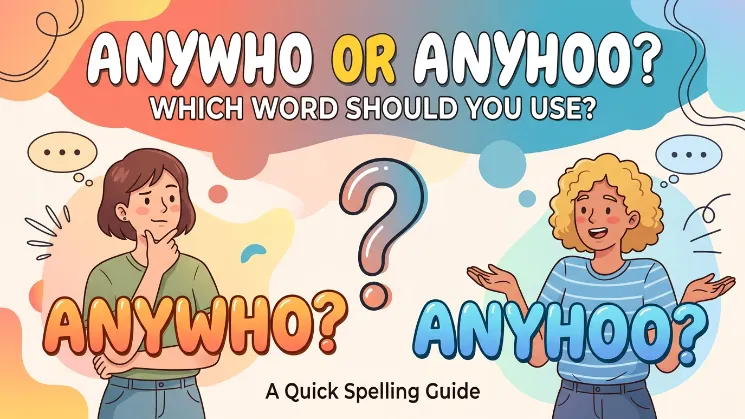
Both “anywho” and “anyhoo” are informal slang words used to change the topic or continue a conversation casually.
You’re chatting with a friend online. After a long random conversation, someone suddenly types, “Anywho, let’s get back to work.” A few minutes later, another person writes “Anyhoo” instead. Now you stop and wonder which one is actually correct?
This is a common confusion in casual English. Many people search for “anywho or anyhoo” because both words appear often in texting, memes, social media posts, and everyday conversations. Since they sound similar and have the same purpose, it’s easy to think one must be wrong.
The truth is simple: both are correct in informal English. They are playful alternatives to the word “anyway.” However, they differ slightly in tone, popularity, and style.
In this detailed guide, you’ll learn the meaning of anywho and anyhoo, their origin, usage differences, examples, common mistakes, and which one sounds more natural in modern English.
Anywho or Anyhoo – Quick Answer
👉 Anywho = More common and natural
👉 Anyhoo = More playful and exaggerated
Meaning:
Both words mean:
👉 Anyway or moving back to the topic
Examples:
- Anywho, let’s continue the meeting. ✅
- Anyhoo, what are you doing later? ✅
✔ Same meaning
✔ Both are informal slang
The Origin of Anywho or Anyhoo
Both words evolved from the standard English word:
👉 Anyway
Over time, people started creating playful variations in casual speech.
Evolution:
- Anyway → Anyhow → Anywho / Anyhoo
These words became popular because they sound:
- Relaxed
- Funny
- Conversational
Why “who” and “hoo”?
The endings don’t change the meaning. They simply make the word sound:
- More expressive
- More humorous
- More casual
This type of playful word change is common in internet culture and spoken English.
British English vs American English Usage
Unlike formal spelling differences, anywho and anyhoo are not tied to British or American English rules.
Key Point:
👉 Both are used mainly in informal spoken English and online communication.
Comparison Table
| Feature | Anywho | Anyhoo |
|---|---|---|
| Meaning | Anyway | Anyway |
| Tone | Casual | More playful |
| Popularity | Higher | Moderate |
| Formal usage | No | No |
✔ No regional rule exists
Which Word Should You Use?
Choosing between anywho or anyhoo depends on tone.
Use “anywho” when:
- You want a casual but natural tone
- You are texting friends
- You want the more common version
Use “anyhoo” when:
- You want a funny or exaggerated tone
- You are joking around
- You want extra playfulness
Simple Rule:
👉 If unsure, use anywho
It sounds more natural in modern casual English.
Common Mistakes with Anywho or Anyhoo
Mistake 1:
❌ Using in formal writing
✔️ Use “anyway” in professional situations
Mistake 2:
❌ Thinking one is grammatically correct and the other is wrong
✔️ Both are informal slang words
Mistake 3:
❌ Using in academic essays
✔️ Avoid both in formal English
Mistake 4:
❌ Overusing in serious communication
✔️ Keep usage casual and friendly
Anywho or Anyhoo in Everyday Examples
In Text Messages:
- “Anywho, what’s your plan tonight?”
- “Anyhoo, I’m going to sleep 😴”
On Social Media:
- “Anywho, here’s my outfit for today 😂”
- “Anyhoo, life goes on!”
Casual Conversations:
- “Anywho, let’s move on.”
- “Anyhoo, that was funny.”
Friendly Chats:
- “Anywho, tell me the full story.”
- “Anyhoo, see you tomorrow!”
Anywho or Anyhoo – Google Trends & Usage Data
Usage trends show:
- Anywho is more popular overall
- Anyhoo appears more in humorous or exaggerated speech
Key Insight:
👉 “Anywho” feels more natural and conversational
👉 “Anyhoo” feels more playful and dramatic
Online Usage:
- TikTok captions → both common
- Memes → “anyhoo” slightly more playful
- Texting → “anywho” dominates
Comparison Table: Anywho vs Anyhoo
| Feature | Anywho | Anyhoo |
|---|---|---|
| Meaning | Anyway | Anyway |
| Tone | Casual | Playful/funny |
| Popularity | Higher | Lower |
| Usage | Everyday chats | Joking tone |
| Formal use | No | No |
Anywho vs Anyhoo in Writing Styles
Casual Writing:
- Both acceptable
- “Anywho” sounds smoother
Social Media:
- Both used widely
- “Anyhoo” adds humor
Professional Writing:
- Avoid both
- Use “anyway” instead
Creative Writing:
- Both can add personality to dialogue
Why People Like Using Anywho or Anyhoo
These words make conversations feel:
- Relaxed
- Friendly
- Funny
- Human
They help soften transitions and make communication feel less formal.
Example:
Instead of:
👉 “Anyway, let’s continue.”
People may say:
👉 “Anywho, let’s continue.”
It sounds warmer and more conversational.
FAQs
1. Is it anywho or anyhoo?
Both are correct in informal English.
2. Which is more common?
“Anywho” is more commonly used.
3. Do they mean different things?
No, both mean “anyway.”
4. Can I use them in formal writing?
No, use “anyway” in professional or academic writing.
5. Why do people say anyhoo?
To sound playful or humorous.
6. Is anywho slang?
Yes, it is informal slang.
7. Which one should I use?
Use “anywho” if you want the more natural and common choice.
Conclusion
The confusion between anywho or anyhoo is easy to understand because both words sound similar and serve the same purpose. They are informal alternatives to “anyway” and are mainly used in casual conversations, texting, and social media.
The main difference is tone. Anywho is more common and sounds more natural in everyday speech. Anyhoo feels more playful, exaggerated, and humorous.
Neither word belongs in formal writing, professional emails, or academic work. In those situations, “anyway” remains the correct and professional option.
If you want the safest and most widely accepted casual choice, go with anywho. But if you want to sound funny or dramatic in friendly conversations, anyhoo works perfectly too.
At the end of the day, both words are about personality and tone not strict grammar rules. Now you can confidently use anywho or anyhoo without second-guessing yourself.

Hi, I’m Liam Rivers, author at Engglory.com.
I’m an English grammar expert who simplifies spelling confusion and tricky grammar rules to help readers write and speak with confidence.