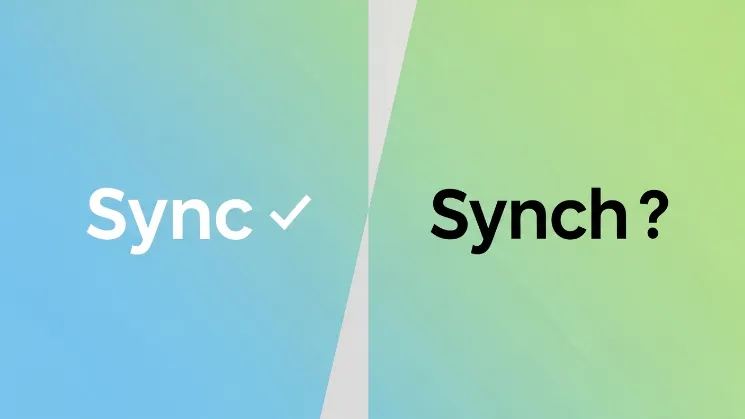
“Sync” is the modern and most common spelling, while “synch” is an older variation still used in some contexts.
You’re setting up your phone and see a button that says “Sync Contacts.” Later, you read an article using the word “synch.” Now you stop and wonder which spelling is actually correct: sync or synch?
This confusion is very common in modern English, especially in technology, media, and casual communication. Since both spellings appear online, many people assume one must be wrong. Others think they have different meanings.
The truth is simple: both words are correct, but one is much more common today. The difference mostly comes from language evolution and changing writing styles in technology and digital culture.
People search for “sync or synch” because they want to use the correct spelling in emails, apps, business writing, coding discussions, and social media. Choosing the wrong form may not be a huge grammar mistake, but using the modern standard makes your writing look clearer and more professional.
In this complete guide, you’ll learn the meanings, origin, spelling differences, usage examples, common mistakes, and which version is best for modern English.
Sync or Synch – Quick Answer
👉 Sync = Modern and preferred spelling
👉 Synch = Older alternative spelling
Meaning:
Both mean:
👉 To make things operate together or stay coordinated
Examples:
- Please sync your files to the cloud. ✅
- The dancers moved in synch. ✅
✔ Same meaning
✔ Different popularity levels
The Origin of Sync or Synch
Both words come from the larger word:
👉 Synchronization or synchronize
Originally, people shortened:
- synchronize → synch
- synchronization → synch
Later, technology companies and digital platforms simplified it further to:
👉 sync
Because shorter words are easier for:
- software interfaces
- apps
- buttons
- commands
the spelling sync became dominant.
Sync vs Synch – Meaning Explained
What Does “Sync” Mean?
“Sync” means:
- To match timing
- To coordinate
- To connect data across devices
Examples:
- Sync your phone with your laptop
- The music and video are in sync
- Cloud storage syncs automatically
What Does “Synch” Mean?
“Synch” has the exact same meaning.
However, it feels:
- older
- less modern
- less common
Examples:
- The swimmers performed in synch
- Their movements stayed perfectly synch
British English vs American English Usage
This difference is not about British vs American English.
Key Point:
👉 Both countries mainly prefer sync today.
Comparison Table
| Feature | Sync | Synch |
|---|---|---|
| Modern usage | Very common | Less common |
| Technology use | Standard | Rare |
| Meaning | Coordinate/match | Coordinate/match |
| Style | Modern | Older variation |
✔ Same meaning globally
Which Spelling Should You Use?
Choosing between sync or synch depends on context and style.
Use “sync” when:
- Writing modern English
- Talking about technology
- Using apps or software terms
- Writing professionally
Use “synch” when:
- Quoting older material
- Writing stylistically
- Using artistic or creative tone
Best Practice:
👉 Use sync in almost all modern situations
It is cleaner, shorter, and more widely accepted.
Common Mistakes with Sync or Synch
Mistake 1:
❌ Thinking synch is incorrect
✔️ Both are correct
Mistake 2:
❌ Using synch in tech writing
✔️ “Sync” is the standard modern term
Mistake 3:
❌ Mixing both spellings in one document
✔️ Stay consistent
Mistake 4:
❌ Assuming they have different meanings
✔️ Meanings are the same
Sync or Synch in Everyday Examples
Technology:
- Sync your contacts automatically
- Photos sync across devices
Entertainment:
- The dancers moved in sync
- The actors stayed perfectly in synch
Business:
- Teams need to stay in sync
- Let’s sync our schedules
Social Media:
- “Our outfits are totally in sync 😄”
- “Everything finally synced perfectly!”
Sync or Synch – Google Trends & Usage Data
Search and usage patterns clearly show:
- Sync dominates modern usage
- Synch appears far less frequently
Why “sync” became popular:
- Easier to type
- Cleaner appearance
- Preferred by technology companies
Common Places You See “Sync”:
- Google Drive
- Apple devices
- Cloud storage
- Music and video apps
Comparison Table: Sync vs Synch
| Feature | Sync | Synch |
|---|---|---|
| Meaning | Same | Same |
| Popularity | Very high | Lower |
| Technology | Standard term | Rare |
| Writing style | Modern | Traditional/older |
| Recommended | Yes | Occasionally |
Sync vs Synch in Technology
The technology world strongly prefers:
👉 sync
Examples:
- Sync settings
- Sync contacts
- Sync files
- Auto-sync enabled
You rarely see:
❌ Synch settings
That’s why modern users naturally recognize “sync” more quickly.
Why “Sync” Became the Standard
Language often becomes shorter over time.
Example:
- advertisement → ad
- application → app
- synchronization → sync
Technology accelerated this change because:
- short words fit better on screens
- commands need simplicity
- users prefer faster reading
Simple Trick to Remember the Difference
Easy Rule:
👉 Sync = standard modern spelling
👉 Synch = older variation
Quick Memory Hack:
Think:
- tech apps always use “sync”
If you’ve seen:
- Sync button
- Sync files
- Sync contacts
then you already know the modern standard.
FAQs
1. Is it sync or synch?
Both are correct, but “sync” is more common today.
2. Which spelling is modern?
“Sync” is the modern preferred spelling.
3. Do sync and synch mean different things?
No, they have the same meaning.
4. Is synch outdated?
Not completely, but it is less common now.
5. Which spelling should I use professionally?
Use “sync.”
6. Why do apps use sync instead of synch?
Because it is shorter and easier to read.
7. Can I still use synch?
Yes, but it may sound old-fashioned.
Conclusion
The confusion between sync or synch is understandable because both spellings exist and share the same meaning. However, modern English strongly prefers sync, especially in technology, business, and digital communication.
While synch is still technically correct, it feels older and appears far less often today. Most apps, software platforms, and professional writing now use sync because it is shorter, cleaner, and easier to recognize.
The most important thing is consistency. If you choose one spelling, stick with it throughout your writing. In most situations, though, sync is the safest and most natural choice.
The easiest way to remember is simple:
👉 Modern English = sync
👉 Older variation = synch
Now you can confidently use sync or synch correctly in any context without confusion.

Hi, I’m Evelyn Hartley. I love writing short stories that explore everyday life and the little emotions we all feel. I try to keep my words simple but meaningful, so readers can really connect with them.