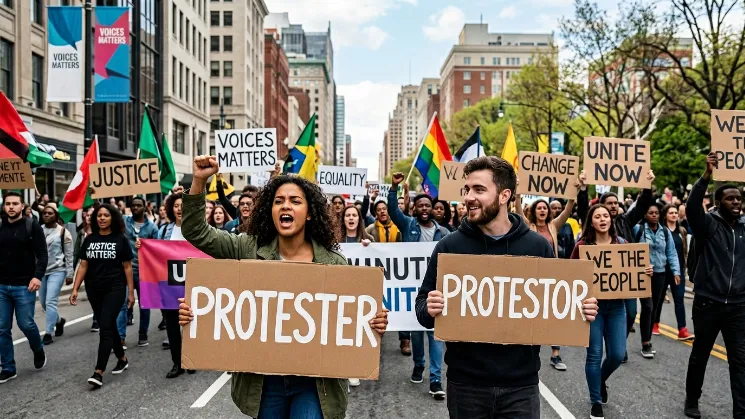
Both “protester” and “protestor” are correct, but “protester” is far more common and preferred in modern English.
You are reading a news article about a political rally when you notice two different spellings used online:
- protester
- protestor
At first glance, both look acceptable. Both appear in newspapers, blogs, and social media discussions. Since English contains many words ending in “-or” and “-er,” it becomes difficult to know which spelling is actually correct.
This is why many people search for “protester or protestor.” Writers, students, journalists, and even native English speakers often become confused because both versions exist in real usage. Some assume one must be American English and the other British English. Others believe one is formal while the other is informal.
The reality is more nuanced.
Both spellings are technically correct, but one is clearly dominant in modern English. Today, most professional dictionaries, news organizations, academic institutions, and style guides strongly prefer “protester.” Meanwhile, “protestor” survives as a less common alternative spelling.
Understanding which version to use matters because spelling affects professionalism, readability, SEO quality, and audience trust. Choosing the standard form also helps your writing look polished and modern.
In this complete guide, you will learn:
- The correct spelling
- Why both versions exist
- Which spelling is more common
- British vs American English usage
- Historical origins
- Professional writing recommendations
- Common mistakes
- SEO and Google Trends insights
- Real-life examples
By the end, you will confidently know when and why to use protester instead of protestor.
Protester or Protestor – Quick Answer
👉 Preferred and most common: Protester ✅
👉 Less common but accepted: Protestor ✅
Meaning:
Both words mean:
👉 A person who publicly opposes or objects to something.
Examples:
- Thousands of protesters marched downtown. ✅
- Several protestors gathered outside the building. ✅
✔ Both spellings exist
✔ “Protester” is strongly preferred in modern English
What Does Protester Mean?
A protester is someone who:
- publicly expresses opposition
- participates in demonstrations
- joins rallies or marches
- protests against policies, actions, or events
The word is commonly associated with:
- politics
- activism
- social movements
- public demonstrations
- civil rights campaigns
Everyday Examples:
- Protesters gathered in the city center.
- Student protesters demanded reforms.
- Environmental protesters blocked traffic.
The Origin of Protester and Protestor
The base word is:
👉 Protest
To create a noun for a person performing an action, English often adds:
- -er
- -or
Historically, both endings existed in English. That is why both spellings developed over time.
Examples of Similar Words
| -er Ending | -or Ending |
|---|---|
| Teacher | Actor |
| Builder | Doctor |
| Runner | Professor |
Because English borrowed vocabulary from Latin, French, and Germanic languages, noun endings became inconsistent.
That inconsistency explains why both protester and protestor appeared historically.
Why “Protester” Became More Popular
Over time, English usage shifted toward:
✔ protester
Modern style guides and dictionaries began favoring the “-er” ending because it aligns more naturally with common English agent nouns.
Why?
Because most action-based English nouns use:
👉 verb + er
Examples:
- teach → teacher
- work → worker
- drive → driver
- protest → protester
As a result, “protester” became the standard modern spelling.
British English vs American English Spelling
Many people think this difference is regional, but that is not entirely true.
Key Point:
👉 Both British and American English strongly prefer “protester.”
Comparison Table
| Feature | Protester | Protestor |
|---|---|---|
| American English | Preferred | Rare |
| British English | Preferred | Rare |
| Modern journalism | Common | Uncommon |
| Academic writing | Preferred | Rare |
✔ “Protester” dominates globally.
Which Spelling Should You Use?
Best Professional Choice:
👉 Use protester
It is:
- more modern
- more accepted
- more natural
- more professional
- more SEO-friendly
When Might “Protestor” Appear?
You may still see “protestor” in:
- older texts
- historical writing
- personal preference usage
- less-edited online content
However, modern professional writing overwhelmingly favors:
✔ protester
Protester vs Protestor – Comparison Table
| Feature | Protester | Protestor |
|---|---|---|
| Correctness | Correct | Correct |
| Popularity | Very high | Lower |
| Modern preference | Strongly preferred | Rare |
| Journalism use | Standard | Uncommon |
| SEO effectiveness | Better | Weaker |
| Academic writing | Preferred | Rare |
Protester in Everyday Examples
In News Articles
- Protesters marched peacefully downtown.
- Student protesters gathered outside parliament.
- Thousands of protesters attended the rally.
In Social Media
- The protesters demanded change.
- Protesters filled the streets tonight.
In Academic Writing
- Protesters often influence public opinion.
- Researchers interviewed environmental protesters.
In Political Contexts
- Anti-war protesters held signs.
- Labor protesters organized demonstrations.
Protestor in Everyday Examples
Although less common, “protestor” still appears occasionally.
Examples:
- Several protestors blocked traffic.
- Protestors gathered outside city hall.
These sentences are not technically wrong, but most editors would still change them to:
✔ protesters
Common Mistakes with Protester or Protestor
Mistake 1: Assuming One Is Completely Wrong
Many people believe “protestor” is invalid.
Reality:
✔ It exists
✔ But it is much less common
Mistake 2: Using Rare Spelling in Professional Writing
❌ protestor
in formal journalism may look outdated or inconsistent.
✔ protester is safer.
Mistake 3: Mixing Spellings in One Article
❌ protesters and protestors together
Always choose one spelling style.
Professional recommendation:
✔ Use “protester” consistently.
Mistake 4: Assuming It Is a UK vs US Difference
Unlike words such as:
- color/colour
- traveler/traveller
this spelling difference is not strongly regional.
Protester in Journalism and Media
Modern media overwhelmingly uses:
✔ protester
Major News Style Guides Prefer:
- AP Style
- Reuters Style
- Most newsroom editors
This matters because journalism strongly influences standard English usage.
Example Headlines:
- Protesters gather outside courthouse
- Climate protesters block highway
- Student protesters demand reforms
You rarely see “protestor” in major publications today.
Protester vs Protestor in SEO Writing
SEO content should usually prefer:
✔ protester
Why?
Because:
- it matches user expectations
- it aligns with modern search trends
- it improves readability
- it increases trust
Search Intent Reality
Most users type:
👉 protester
far more often than:
👉 protestor
That makes “protester” the stronger keyword for SEO-focused writing.
Google Trends & Usage Data
Usage patterns clearly show:
✔ “Protester” dominates global English usage.
Search Trend Insights
| Word | Usage Popularity |
|---|---|
| Protester | Extremely high |
| Protestor | Much lower |
Key Observation
“Protestor” still appears occasionally, but “protester” is the modern standard in:
- news
- education
- publishing
- SEO
- journalism
- academic writing
Why English Allows Both Spellings
English vocabulary comes from multiple language families.
That creates spelling variation.
Similar Examples
| Common Form | Less Common Variant |
|---|---|
| Adviser | Advisor |
| Traveler | Traveller |
| Protester | Protestor |
Over time, one version usually becomes dominant.
For this word:
✔ protester won in modern usage.
Pronunciation Difference
There is no major pronunciation difference.
Both are generally pronounced:
👉 /prəˈtes.tər/
That is another reason confusion exists.
People hear the same sound but see different spellings online.
Protester vs Protestor in Academic Writing
Academic institutions strongly prefer:
✔ protester
Why?
Because it is:
- standardized
- modern
- widely recognized
Using “protestor” in academic work may appear less polished unless quoting historical material.
Protester in Legal and Political Writing
Government reports and political analysis usually use:
✔ protester
Examples:
- peaceful protesters
- political protesters
- anti-government protesters
This standardization helps maintain clarity across official communication.
Memory Tricks to Remember the Preferred Form
Trick 1: Most Action Words Use “-er”
Examples:
- worker
- teacher
- driver
- protester
Trick 2: Think Modern English
Modern English usually prefers:
✔ protester
Trick 3: News Headlines Use Protester
If you imagine a newspaper headline, you will almost always see:
✔ protesters
not protestors.
Related Word Confusions
People who confuse “protester/protestor” often confuse similar endings.
Examples
| Variation | Preferred Modern Form |
|---|---|
| Advisor/Adviser | Both accepted |
| Actor/Acter | Actor |
| Protestor/Protester | Protester |
| Governor/Governor | Governor |
English noun endings are not always perfectly consistent.
How Dictionaries Treat the Word
Most major dictionaries:
✔ recognize both spellings
However:
- “protester” is listed first
- “protestor” is often labeled less common
This confirms modern preference clearly.
FAQs
1. Is it protester or protestor?
Both are correct, but “protester” is far more common and preferred.
2. Which spelling is more modern?
“Protester” is the modern standard spelling.
3. Is protestor wrong?
No. It is accepted but less common.
4. Do British and American English use different spellings?
No. Both generally prefer “protester.”
5. Which spelling should I use in professional writing?
Use “protester.”
6. Why do both spellings exist?
Because English historically allowed both “-er” and “-or” noun endings.
7. Which spelling is better for SEO?
“Protester” performs better because it matches dominant search usage.
8. Can I use protestor in academic writing?
You can, but “protester” is strongly preferred.
Conclusion
The confusion between protester or protestor exists because both spellings appear in real-world English. However, modern usage clearly favors one version.
✔ “Protester” is the standard, preferred, and dominant spelling. “Protestor” is accepted but significantly less common.
This difference is not mainly about British versus American English. Instead, it reflects how modern English evolved toward the more natural “-er” noun pattern.
Today, professional writers, journalists, academics, editors, and SEO experts overwhelmingly choose:
👉 protester
Using the preferred spelling improves:
- readability
- professionalism
- consistency
- audience trust
- SEO quality
While “protestor” is not technically wrong, it can appear outdated or less polished in modern communication.
The easiest rule to remember is simple:
👉 Most English action nouns use “-er” → protester
Once you understand that pattern, choosing the correct spelling becomes much easier in every type of writing.

Hi, I’m Liam Rivers, author at Engglory.com.
I’m an English grammar expert who simplifies spelling confusion and tricky grammar rules to help readers write and speak with confidence.