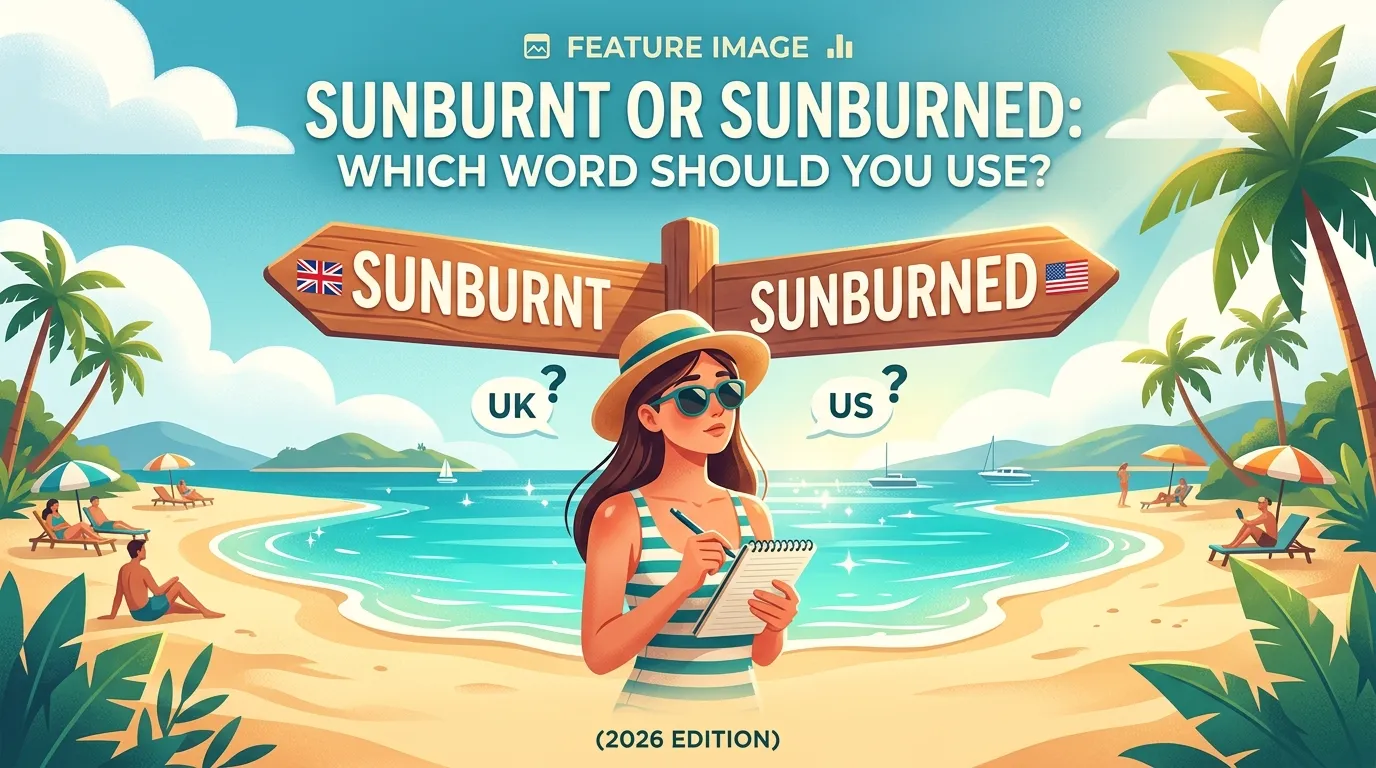
Both “sunburnt” and “sunburned” are correct, but “sunburned” is more common in American English, while “sunburnt” is often preferred in British English.
After a long day at the beach, you look in the mirror and notice your skin has turned bright red. When telling a friend about it, you suddenly wonder: should you say you’re sunburnt or sunburned?
This is a common English confusion because both words appear in dictionaries, books, news articles, and everyday conversations. Unlike many spelling debates where one version is wrong, sunburnt and sunburned are both correct. The difference mainly comes down to regional preferences and writing style.
People search for “sunburnt or sunburned” because they want to know:
- which word is correct
- whether one is American and the other British
- which version sounds more natural
- which spelling should be used in formal writing
- whether there is any difference in meaning
The good news is simple:
👉 Sunburnt and sunburned mean exactly the same thing.
The choice usually depends on where you’re writing and who your audience is.
In this guide, you’ll learn the meanings, origins, regional differences, examples, common mistakes, usage trends, and practical advice for choosing between sunburnt and sunburned.
Sunburnt or Sunburned – Quick Answer
👉 Sunburnt = More common in British English 🇬🇧
👉 Sunburned = More common in American English 🇺🇸
Examples
- I got sunburnt during my vacation. ✅
- I got sunburned during my vacation. ✅
Both sentences are correct.
Simple Rule
👉 UK audience = Sunburnt
👉 US audience = Sunburned
The Origin of Sunburnt or Sunburned
The word comes from:
👉 sun + burn
Originally, English created past participle forms in different ways.
Some verbs developed:
- burned
- learned
- dreamed
While others commonly used:
- burnt
- learnt
- dreamt
As a result, both sunburned and sunburnt became accepted forms.
Over time, regional preferences emerged, but neither version became incorrect.
Sunburnt vs Sunburned – Meaning Explained
What Does “Sunburnt” Mean?
“Sunburnt” describes skin that has been damaged or reddened by excessive exposure to sunlight.
Examples
- Her shoulders were sunburnt.
- We came home sunburnt after the beach trip.
- The hikers looked badly sunburnt.
What Does “Sunburned” Mean?
“Sunburned” has exactly the same meaning.
Examples
- His face was sunburned.
- The tourists became sunburned after hours outside.
- She applied lotion to her sunburned skin.
British English vs American English Spelling
This is where the main difference appears.
General Usage Trends
| Word | UK English | US English |
|---|---|---|
| Sunburnt | Very common | Less common |
| Sunburned | Common | Very common |
Key Observation
👉 British writers often prefer sunburnt.
👉 American writers often prefer sunburned.
Both are understood internationally.
Which Spelling Should You Use?
The best choice depends on your audience.
Use “Sunburnt” When:
- writing for British readers
- following British English conventions
- using traditional UK style
Use “Sunburned” When:
- writing for American readers
- following American English style guides
- creating content for US audiences
For International Audiences
Both forms are acceptable.
However, sunburned tends to appear slightly more often in global online content.
Simple Rule
👉 UK English = Sunburnt
👉 US English = Sunburned
Common Mistakes with Sunburnt or Sunburned
Mistake 1
❌ Thinking one version is wrong.
✔ Both are correct.
Mistake 2
❌ Assuming they have different meanings.
✔ They mean exactly the same thing.
Mistake 3
❌ Mixing styles in the same document.
✔ Choose one version and stay consistent.
Mistake 4
❌ Believing sunburnt is old-fashioned.
✔ It remains widely used, especially in British English.
Sunburnt or Sunburned in Everyday Examples
Vacation
- We got sunburnt during our holiday.
- We got sunburned at the beach.
Family Conversations
- The kids came home sunburnt.
- The kids came home sunburned.
Social Media
- “I forgot sunscreen and got sunburnt 😭”
- “Completely sunburned after today’s hike!”
News and Health Articles
- Doctors warned about sunburned skin.
- Health campaigns highlighted sunburnt tourists.
Sunburnt or Sunburned – Google Trends & Usage Data
Usage data generally shows:
👉 Sunburned appears more frequently worldwide.
This is partly due to:
- the influence of American English
- online publishing trends
- international media usage
However:
👉 Sunburnt remains very popular in:
- the UK
- Australia
- New Zealand
- other Commonwealth countries
Key Insight
Both forms remain active and widely accepted.
Comparison Table: Sunburnt vs Sunburned
| Feature | Sunburnt | Sunburned |
|---|---|---|
| Correct spelling | Yes | Yes |
| Same meaning | Yes | Yes |
| British preference | Stronger | Weaker |
| American preference | Less common | Stronger |
| Formal writing | Yes | Yes |
| Everyday conversation | Yes | Yes |
Why English Allows Both Forms
English contains many verbs with two accepted past participles.
Similar Examples
| British Preference | American Preference |
|---|---|
| Burnt | Burned |
| Learnt | Learned |
| Dreamt | Dreamed |
| Spoilt | Spoiled |
The same pattern explains:
👉 sunburnt
👉 sunburned
Which Version Sounds More Natural?
This often depends on where you grew up.
Many British Speakers Prefer
- sunburnt skin
- sunburnt tourists
- sunburnt shoulders
Many American Speakers Prefer
- sunburned skin
- sunburned tourists
- sunburned shoulders
Neither sounds unusual to native speakers.
Why This Confuses English Learners
The confusion happens because:
- both spellings are correct
- dictionaries list both forms
- regional preferences vary
- online content uses both versions
Many learners expect one spelling to be wrong, but that isn’t the case here.
Simple Trick to Remember the Difference
Easy Memory Rule
👉 British English = Sunburnt 🇬🇧
👉 American English = Sunburned 🇺🇸
Quick Reminder
Both are correct.
The audience determines the better choice.
FAQs
1. Is it sunburnt or sunburned?
Both are correct English words.
2. Which spelling is more common?
Sunburned is generally more common worldwide, while sunburnt is especially popular in British English.
3. Do sunburnt and sunburned mean different things?
No. They have the same meaning.
4. Is sunburnt British English?
Yes. It is more commonly used in British English.
5. Is sunburned American English?
Yes. It is more commonly used in American English.
6. Can I use either spelling in formal writing?
Yes. Both are accepted in formal writing.
7. What is the easiest way to remember the difference?
Think: UK = sunburnt, US = sunburned.
Conclusion
The confusion between sunburnt or sunburned exists because English allows both forms, and both have been used for many years. Unlike many spelling questions, there is no incorrect option here.
Both words mean:
- skin damaged by sunlight
- redness caused by UV exposure
- the result of spending too much time in the sun
The main difference is regional preference.
Sunburnt is more common in:
- the United Kingdom
- Australia
- New Zealand
- Commonwealth English
Sunburned is more common in:
- the United States
- American publications
- much of global online content
The easiest way to remember is:
👉 UK English = Sunburnt 🇬🇧
👉 US English = Sunburned 🇺🇸
Whichever form you choose, stay consistent throughout your writing to keep it clear and professional.

Hi, I’m Evelyn Hartley. I love writing short stories that explore everyday life and the little emotions we all feel. I try to keep my words simple but meaningful, so readers can really connect with them.