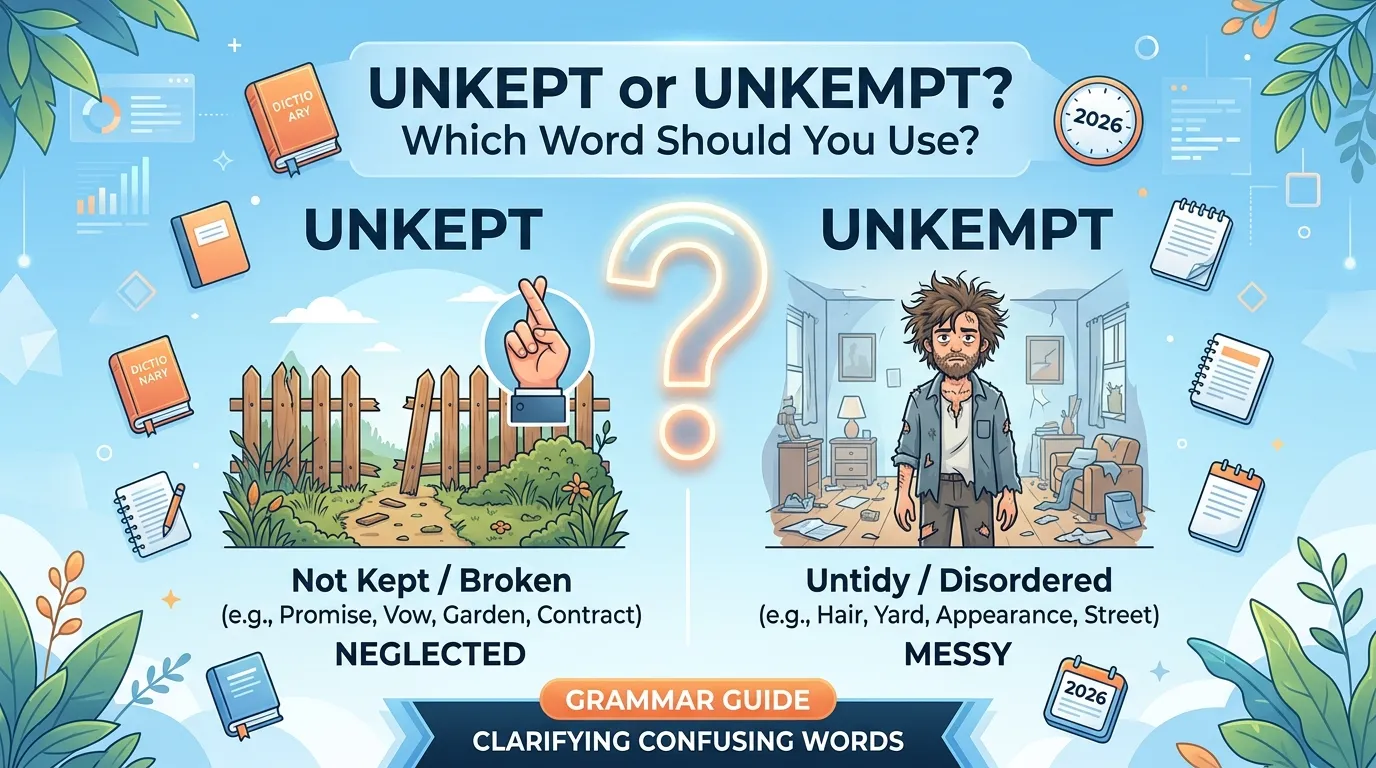
“Unkempt” is the correct word for describing something messy, untidy, or poorly groomed. “Unkept” is a less common word that usually means not maintained or not fulfilled.
Picture this: you’re describing a person with messy hair, an overgrown lawn, or a cluttered room. You start typing and suddenly pause. Should you write unkept or unkempt?
This is a surprisingly common question because both words seem logical. After all, if something is kept, wouldn’t the opposite be unkept? While that sounds reasonable, English doesn’t always follow the patterns we expect.
In modern English, unkempt is the standard word used to describe something untidy, disorganized, or poorly maintained in appearance. Meanwhile, unkept exists but is much less common and is generally used in different contexts, such as promises, commitments, or responsibilities that were not fulfilled.
People search for “unkept or unkempt” because they want to know:
- which word is correct
- whether unkept is a real word
- what unkempt means
- when to use each term
- how to avoid common writing mistakes
The good news is that the distinction is straightforward once you understand the meanings. In this guide, you’ll learn the origins, definitions, examples, spelling differences, usage trends, common mistakes, and practical advice for using unkept and unkempt correctly.
Unkept or Unkempt – Quick Answer
👉 Unkempt = Messy, untidy, neglected, poorly groomed ✅
👉 Unkept = Not kept, maintained, or fulfilled ⚠️
Examples
- His hair looked unkempt. ✅
- The garden appeared unkempt after months of neglect. ✅
- It was an unkept promise. ✅
Simple Rule
👉 Talking about appearance? Use unkempt.
👉 Talking about promises or obligations? Use unkept.
The Origin of Unkept or Unkempt
Understanding the history of these words makes the difference easier to remember.
Origin of “Unkempt”
The word unkempt comes from the old English word kempt, which meant:
- neat
- tidy
- well-groomed
Although kempt is rarely used today, its opposite survived and became common.
Over time, unkempt developed the meaning:
👉 messy, untidy, or neglected in appearance.
Origin of “Unkept”
The word unkept is built from:
👉 un + kept
It literally means:
- not kept
- not maintained
- not fulfilled
Because English already had the established word unkempt, unkept never became the primary term for describing appearance.
Unkept vs Unkempt – Meaning Explained
What Does “Unkempt” Mean?
“Unkempt” describes something that appears:
- messy
- disorganized
- neglected
- poorly groomed
It is most commonly used for people, hair, clothing, lawns, gardens, and buildings.
Example 1
- His unkempt beard made him look older.
Example 2
- The abandoned house had an unkempt yard.
What Does “Unkept” Mean?
“Unkept” means:
- not maintained
- not fulfilled
- not honored
It is often connected with promises, agreements, and responsibilities.
Example 1
- The manager made several unkept promises.
Example 2
- Years of unkept commitments damaged the relationship.
British English vs American English Spelling
Unlike many spelling debates, there is no major difference between British and American English here.
Usage Comparison
| Word | British English | American English |
|---|---|---|
| Unkempt | Standard | Standard |
| Unkept | Less common | Less common |
Key Point
Both British and American writers overwhelmingly prefer unkempt when describing appearance.
Which Word Should You Use?
The answer depends on what you’re describing.
Use “Unkempt” For:
- hair
- clothing
- beards
- lawns
- gardens
- rooms
- appearance
Examples
- An unkempt lawn.
- An unkempt appearance.
- An unkempt apartment.
Use “Unkept” For:
- promises
- agreements
- commitments
- responsibilities
Examples
- An unkept promise.
- An unkept obligation.
- Several unkept commitments.
Common Mistakes with Unkept or Unkempt
Mistake 1
❌ Her hair looked unkept.
✔ Her hair looked unkempt.
Mistake 2
❌ The lawn was unkept.
✔ The lawn was unkempt.
Mistake 3
❌ Using the words interchangeably.
✔ Their meanings are different.
Mistake 4
❌ Assuming unkept is the standard opposite of kept.
✔ English traditionally uses unkempt for appearance-related descriptions.
Unkept or Unkempt in Everyday Examples
Personal Appearance
- He arrived looking unkempt after the long flight.
- The actor played an unkempt traveler.
Home and Property
- The garden became unkempt during the winter.
- Residents complained about the unkempt property.
Business and Work
- Customers were frustrated by unkept promises.
- The company faced criticism for its unkept commitments.
Social Media
- My hair is completely unkempt today.
- Another year, another unkept promise from the team.
Unkept or Unkempt – Google Trends & Usage Data
Usage patterns consistently show:
👉 Unkempt is significantly more common than unkept.
You’ll find unkempt regularly used in:
- novels
- magazines
- newspapers
- blogs
- online discussions
Meanwhile, unkept appears mainly in phrases such as:
- unkept promise
- unkept commitment
- unkept agreement
Key Insight
When people search for unkept, they are often actually looking for unkempt.
Comparison Table: Unkept vs Unkempt
| Feature | Unkept | Unkempt |
|---|---|---|
| Means messy | No | Yes |
| Means untidy | No | Yes |
| Describes appearance | Rarely | Yes |
| Refers to promises | Yes | Sometimes |
| Common modern usage | Low | High |
| Preferred word for hair or lawns | No | Yes |
Why “Unkempt” Is More Popular
Several factors explain why unkempt became the preferred word:
- It has been used for centuries.
- Major dictionaries list it as the standard term.
- Writers frequently use it in descriptions.
- Readers instantly recognize its meaning.
As a result, it remains the dominant choice in modern English.
Why People Confuse These Words
The confusion happens because:
- “kept” is a very common word.
- “kempt” is relatively rare.
- Both spellings seem logical.
- Most people hear “unkempt” more often than they see it written.
Because of this, many writers naturally assume unkept must be correct.
Similar Word Pairs That Cause Confusion
English contains many word pairs that look or sound similar.
| Commonly Confused Words |
|---|
| Site / Cite |
| Affect / Effect |
| Principal / Principle |
| Stationary / Stationery |
| Unkept / Unkempt |
Learning the meaning behind each word is the best way to avoid mistakes.
Simple Trick to Remember the Difference
Easy Memory Rule
👉 Unkempt = messy appearance
👉 Unkept = promise not kept
Quick Reminder
Hair, beard, lawn, room, clothing?
✔ Unkempt
Promise, agreement, commitment?
✔ Unkept
FAQs
1. Is it unkept or unkempt?
For messy or untidy appearance, unkempt is the correct choice.
2. Is unkept a real word?
Yes, but it is less common and usually means not maintained or not fulfilled.
3. What does unkempt mean?
It means messy, untidy, disorganized, or poorly groomed.
4. Can I say unkept hair?
Standard English strongly prefers unkempt hair.
5. What is an unkept promise?
A promise that was not honored or fulfilled.
6. Is unkempt used in both American and British English?
Yes. It is standard in both varieties.
7. Which word is more common?
Unkempt is far more common in modern English.
Conclusion
The confusion between unkept or unkempt comes from the fact that both words appear to be logical opposites of other English terms. However, modern English assigns them different roles.
Unkempt is the standard word used to describe:
- messy hair
- untidy clothing
- neglected gardens
- cluttered spaces
- poor grooming
Unkept, on the other hand, is much less common and typically refers to:
- promises not fulfilled
- agreements not honored
- commitments not maintained
The easiest way to remember the difference is:
👉 Unkempt = messy appearance ✅
👉 Unkept = not fulfilled ✅
In most everyday situations involving appearance, grooming, homes, or gardens, unkempt is the word you should choose. Using it correctly will make your writing sound more natural, accurate, and professional.

Hi, I’m Evelyn Hartley. I love writing short stories that explore everyday life and the little emotions we all feel. I try to keep my words simple but meaningful, so readers can really connect with them.