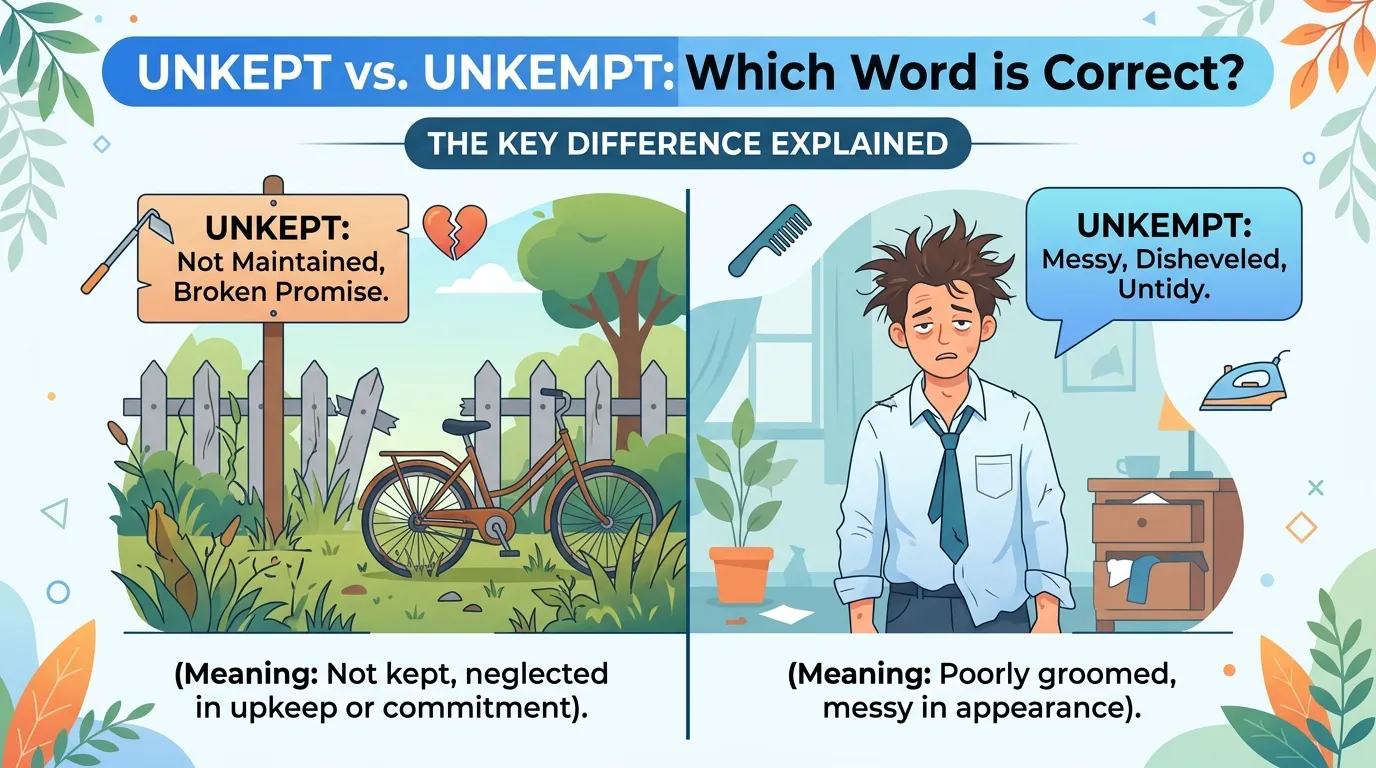
“Unkempt” is the correct and standard English word meaning messy or untidy, while “unkept” is usually incorrect in this context.
Imagine you’re describing someone’s messy hair, an overgrown garden, or a neglected room. You want to say it looks untidy, but then you pause: should it be unkept or unkempt?
This is a surprisingly common confusion because both words seem logical. Since English has words like kept, many people assume that unkept must be the opposite of kept. However, when describing something messy, disorganized, or poorly maintained, the correct word is usually unkempt.
People search for “unkept or unkempt” because they want to know:
- which spelling is correct
- whether unkept is a real word
- what unkempt means
- how to use each word properly
- why dictionaries prefer unkempt
The good news is simple:
👉 Unkempt is the standard word for messy or untidy.
👉 Unkept exists in limited situations but usually does not mean messy.
In this guide, you’ll learn the meanings, origins, differences, examples, common mistakes, comparison tables, and practical usage tips for unkept and unkempt.
Unkept or Unkempt – Quick Answer
👉 Unkempt = Messy, untidy, poorly maintained ✅
👉 Unkept = Rare word meaning not kept or not maintained ⚠️
Examples
- His hair looked unkempt. ✅
- The yard appeared unkempt. ✅
❌ His hair looked unkept.
✔ His hair looked unkempt.
Simple Rule
👉 Messy appearance = Unkempt
The Origin of Unkept or Unkempt
Origin of “Unkempt”
The word unkempt comes from the old English word kempt, which meant:
- neat
- well-groomed
- orderly
Over time, “kempt” became rare, but its opposite survived.
Today:
👉 unkempt = untidy or messy
Origin of “Unkept”
“Unkept” comes from:
👉 un + kept
Literally meaning:
- not kept
- not maintained
- not fulfilled
Although grammatically possible, it is much less common than unkempt.
Unkept vs Unkempt – Meaning Explained
What Does “Unkempt” Mean?
“Unkempt” describes:
- messy hair
- untidy appearance
- neglected conditions
- poor grooming
Examples
- He arrived with unkempt hair.
- The abandoned property looked unkempt.
- Her room was unkempt and cluttered.
What Does “Unkept” Mean?
“Unkept” generally means:
- not kept
- not maintained
- not preserved
- not fulfilled
Examples
- An unkept promise disappointed everyone.
- The agreement remained unkept.
While these uses exist, they are relatively uncommon.
British English vs American English Usage
There is no significant spelling difference here.
Both British and American English prefer:
👉 unkempt
when describing appearance or cleanliness.
Comparison Table
| Word | UK English | US English |
|---|---|---|
| Unkempt | Correct | Correct |
| Unkept | Limited use | Limited use |
✔ Same usage worldwide
Which Word Should You Use?
The answer depends on what you mean.
Use “Unkempt” When Talking About:
- messy hair
- untidy clothes
- neglected gardens
- disorganized rooms
- poor grooming
Examples
- An unkempt beard
- An unkempt lawn
- Unkempt appearance
Use “Unkept” When Talking About:
- promises
- agreements
- obligations
- things not maintained
Examples
- An unkept promise
- An unkept commitment
Common Mistakes with Unkept or Unkempt
Mistake 1
❌ His beard looked unkept.
✔ His beard looked unkempt.
Mistake 2
❌ The garden appeared unkept.
✔ The garden appeared unkempt.
Mistake 3
❌ Thinking unkept and unkempt are interchangeable.
✔ They have different uses.
Mistake 4
❌ Assuming unkept is the standard opposite of kept.
✔ English prefers unkempt for appearance-related descriptions.
Unkept or Unkempt in Everyday Examples
Personal Appearance
- His hair was unkempt.
- She looked tired and unkempt.
Homes and Gardens
- The yard appeared unkempt.
- The property remained unkempt for years.
Relationships
- An unkept promise damaged trust.
- Several commitments went unkept.
News Writing
- The abandoned building looked unkempt.
- Residents complained about unkempt public spaces.
Unkept or Unkempt – Google Trends & Usage Data
Usage patterns consistently show:
👉 Unkempt is far more common.
It appears frequently in:
- books
- articles
- journalism
- fiction
- everyday speech
Meanwhile:
👉 Unkept appears much less often and usually refers to promises or obligations.
Key Insight
Most people searching “unkept” actually mean unkempt.
Comparison Table: Unkept vs Unkempt
| Feature | Unkept | Unkempt |
|---|---|---|
| Standard word for messy appearance | No | Yes |
| Refers to promises | Yes | No |
| Refers to untidy hair | No | Yes |
| Refers to neglected property | Rarely | Yes |
| Common modern usage | Low | High |
Why “Unkempt” Sounds Strange
Many English speakers are surprised because:
👉 “kempt” is rarely used today.
You will occasionally hear:
- neatly kempt
- well-kempt
But these expressions are uncommon.
As a result, some people assume unkept should be the opposite.
English, however, preserved:
✔ unkempt
as the standard word.
Unkempt in Literature and Media
Writers frequently use unkempt to create vivid descriptions.
Examples
- an unkempt traveler
- an unkempt beard
- an unkempt garden
- an unkempt apartment
The word immediately suggests neglect or disorder.
Why People Confuse These Words
The confusion happens because:
- kept is common
- kempt is uncommon
- both words seem logical
- pronunciation is somewhat similar
Many writers naturally assume:
kept → unkept
But standard English usually prefers:
kempt → unkempt
for appearance-related meanings.
Simple Trick to Remember the Difference
Easy Memory Rule
👉 Unkempt = messy appearance
👉 Unkept = promise not kept
Quick Reminder
Messy hair?
✔ unkempt
Broken promise?
✔ unkept
FAQs
1. Is it unkept or unkempt?
For messy or untidy appearance, unkempt is correct.
2. What does unkempt mean?
It means messy, untidy, or poorly maintained.
3. Is unkept a real word?
Yes, but it is much less common and usually means not kept or not fulfilled.
4. Can I say unkept hair?
Standard English strongly prefers unkempt hair.
5. What is an unkept promise?
A promise that was not fulfilled or honored.
6. Is unkempt used in both British and American English?
Yes. Both varieties use it regularly.
7. What is the easiest way to remember the difference?
Unkempt describes appearance, while unkept usually refers to promises or obligations.
Conclusion
The confusion between unkept or unkempt happens because modern English speakers are familiar with the word kept but rarely encounter kempt. This makes unkept seem like the obvious choice, even though English usually uses unkempt for untidy appearances.
The correct word for describing:
- messy hair
- untidy clothing
- neglected gardens
- disorganized spaces
is:
👉 Unkempt ✅
Meanwhile, unkept is a less common word that generally means:
- not maintained
- not fulfilled
- not honored
such as:
👉 an unkept promise
The easiest way to remember is:
👉 Unkempt = messy appearance
👉 Unkept = not fulfilled
Using the correct word will make your writing clearer, more natural, and more professional in both formal and everyday English.

Hi, I’m Liam Rivers, author at Engglory.com.
I’m an English grammar expert who simplifies spelling confusion and tricky grammar rules to help readers write and speak with confidence.