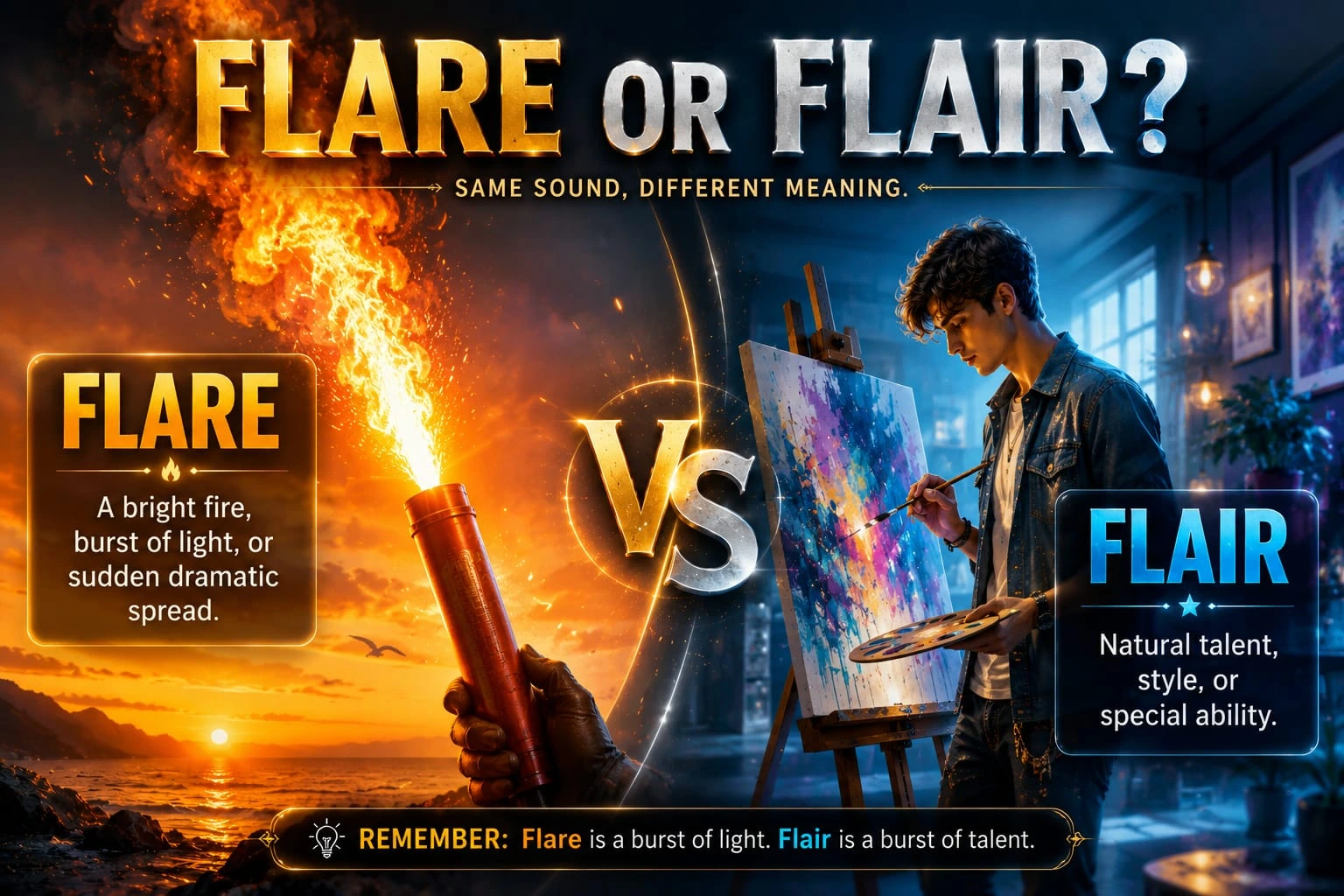
Flare means a burst, spread, or sudden increase, while flair means natural talent, style, or special ability. _______________________________________________________________________________________________
Have you ever written a sentence and stopped to think: is it flare or flair? Many people search for this keyword because the two words sound almost the same. They look similar too. This makes them easy to mix up.
The confusion happens in daily writing. You may see phrases like “a flair for writing” or “a dramatic flare in the sky.” Since both words are common, people often use the wrong one in emails, school work, social media posts, and business writing.
The good news is that the answer is simple once you learn the meaning of each word. Flare and flair are not different spellings of the same word. They are two separate words with different meanings. One relates to spreading, burning, or widening. The other relates to talent, style, or natural skill.
This guide gives you a quick answer first. Then it explains the history, spelling differences, examples, mistakes, and practical advice so you can use the correct word every time.
Flare or Flair: Quick Answer
Flair and flare are different words with different meanings.
Flare = a burst, or sudden increase.
Examples:
- The fire began to flare.
- Her allergies flared up yesterday.
- The road begins to flare outward.
Flair = natural talent, style, or special ability.
Examples:
- He has a flair for design.
- She writes with great flair.
- The event had artistic flair.
Quick memory trick:
- Flair = talent
- Flare = fire or spread
The Origin of Flare or Flair
The two words come from different language roots.
Flare comes from old words connected with spreading out, shining, or burning brightly. Over time, it became linked to fire, light, and sudden growth.
Flair came from older French words linked to smell or instinct. Later, English speakers started using it to mean natural ability or special style.
Because the words sound alike, many people think they are spelling versions of one word. They are not.
The spelling difference exists because the words developed from different histories and meanings.
British English vs American English Spelling
Unlike words such as color/colour or center/centre, flare and flair are not British and American spelling versions.
Both British and American English use the same spellings because the meanings are different.
Examples:
American English
- He has a flair for marketing.
- Gas prices may flare again.
British English
- She has a flair for fashion.
- Tensions may flare quickly.
Comparison Table
| Word | Meaning | US English | UK English |
| Flare | Fire, spread, increase | Flare | Flare |
| Flair | Talent, style | Flair | Flair |
Which Spelling Should You Use?
The correct choice depends on what you want to say, not where your audience lives.
For US audiences
Use flare for fire, growth, or sudden increases.
Use flair for talent or style.
For UK and Commonwealth audiences
The same rule applies.
Use flare for expansion or burning.
Use flair for ability or creativity.
For global audiences
Keep the meanings separate.
If you mean skill or style, choose flair.
If you mean a burst, rise, or spread, choose flare.
Common Mistakes with Flare or Flair
People often swap these words because they sound alike.
| Wrong | Correct |
| She has a flare for music. | She has a flair for music. |
| He writes with flare. | He writes with flair. |
| The fire showed artistic flair. | The fire showed artistic flare. |
| His illness had a flair up. | His illness had a flare-up. |
Remember:
Skill = flair
Fire or increase = flare
Flare or Flair in Everyday Examples
Emails
Correct:
- You have a flair for clear communication.
- Customer complaints may flare during busy periods.
News
Correct:
- Violence may flare near the border.
- The actor brought style and flair to the role.
Social Media
Correct:
- She decorates her room with creative flair.
- The debate started to flare online.
Formal Writing
Correct:
- The candidate showed leadership flair.
- Economic concerns may flare in coming months.
Flare or Flair: Google Trends & Usage Data
Search interest for flare and flair changes based on context.
Flare often appears in:
- Health searches
- Solar activity searches
- Fashion searches like flare jeans
- News stories
Flair often appears in:
- Writing
- Fashion
- Design
- Career topics
- Personal skills
Countries with strong English usage such as the United States, Canada, the United Kingdom, Australia, and India frequently search both words because people want spelling help.
Keyword Variation Comparison
| Keyword Variation | Meaning |
| flare vs flair | General comparison |
| flare meaning | Fire, increase, spread |
| flair meaning | Talent or style |
| flare up meaning | Sudden increase |
| flair for writing | Natural writing ability |
| flare jeans | Wide-leg clothing style |
| artistic flair | Creative style |
FAQs
Is flair a British spelling of flare?
No. They are separate words with different meanings.
Which is correct: flair for writing or flare for writing?
Flair for writing is correct because it refers to talent.
What does flare mean?
Flare means a burst, spread, increase, or bright fire.
What does flair mean?
Flair means natural talent, style, or ability.
Is flare-up one word?
It is usually written as flare-up with a hyphen.
Why do people confuse flare and flair?
People confuse them because they sound almost identical.
Can I use flare and flair in the same sentence?
Yes.
Example:
“His creative flair helped the campaign flare across social media.”
Conclusion
The difference between flare and flair becomes easy when you connect each word with its meaning. Flare relates to fire, growth, widening, or sudden increases. Flair relates to talent, style, and natural ability. The two words may sound alike, but they are not spelling variations from different countries. British English and American English use the same forms.
A simple memory trick can help. Think of flair as special skill and personality. Think of flare as heat, expansion, or something that suddenly becomes bigger. This small rule can save you from common writing mistakes.
If you write for business, school, websites, or social media, using the correct word helps your writing look clean and professional. Readers notice language mistakes quickly. Picking the right word builds trust and makes your message stronger.
The next time you stop and wonder whether to write flare or flair, ask one question: am I talking about talent or a burst of action? The answer will guide you every time.

As an English language enthusiast, I love diving into the tricky details of word differences and spelling variations. My mission is to explain confusing terms and make them accessible to everyone, helping readers to communicate with clarity and confidence.