Themselves is the standard form used for plural subjects, while themself can be used with singular they in some cases. ________________________________________________________________________________________________________
Words can create confusion even for native English speakers. One common question people ask is “themselves or themself?” Both words look similar. Both seem logical. Yet many writers stop and wonder which one is correct. Students, bloggers, teachers, and professionals search for this keyword because they want clear grammar rules and simple answers.
The confusion exists because English grammar has changed over time. Traditionally, themselves was used with plural subjects. However, modern English now often uses singular they, and that creates questions about whether themself can also be correct. Some people see themself online and think it is a mistake. Others see it used in articles and style guides and become unsure.
The good news is that the answer is not difficult. Both forms exist, but they are used in different situations. Knowing when to use each one helps your writing sound natural and professional. In this article, you will get a quick answer, understand the history of these words, compare British and American usage, avoid common mistakes, and learn which choice fits your audience.
Themselves or Themself: Quick Answer
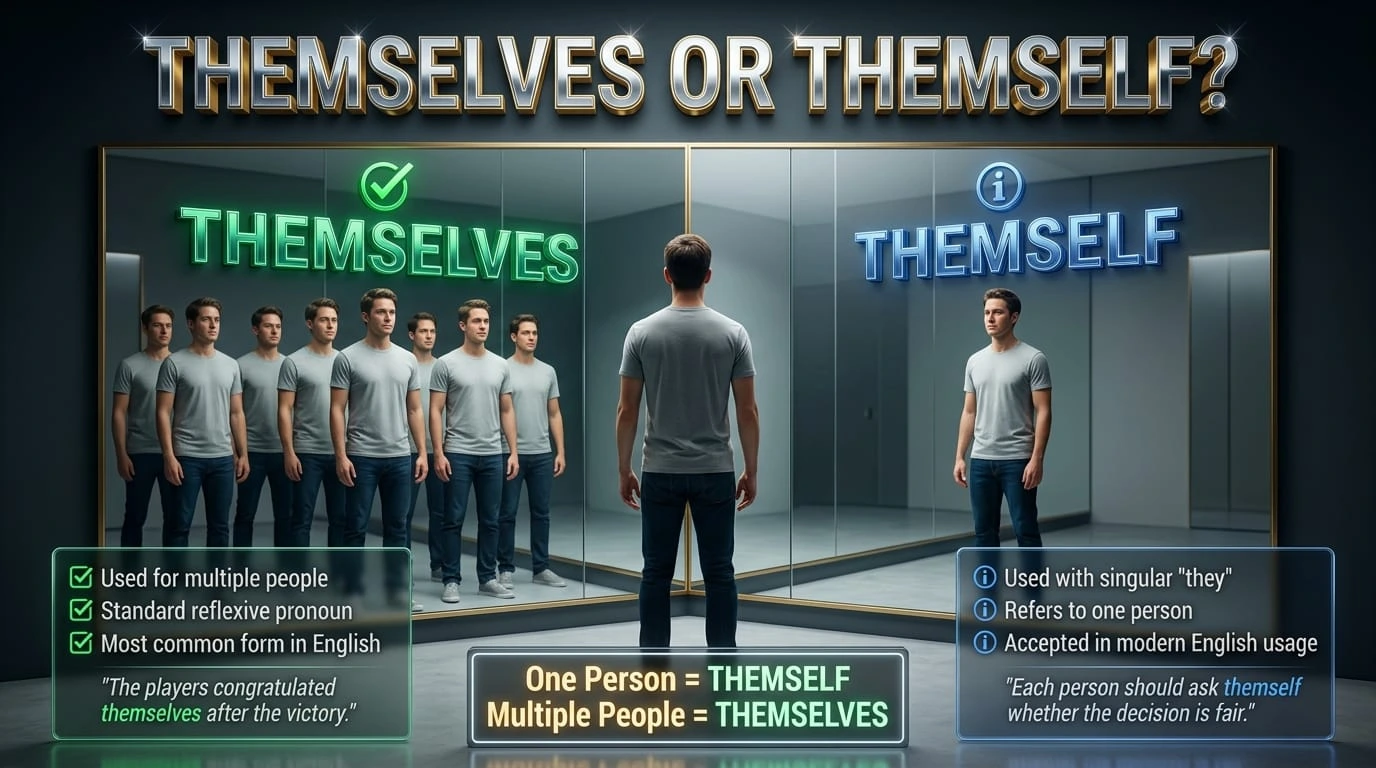
Themselves is the standard and most common form.
It is used for plural subjects:
Examples:
- The students prepared themselves for the exam.
- The players enjoyed themselves.
Themself is used in some cases with singular they.
Examples:
- Someone should ask themself this question.
- Each person can decide for themself.
The Origin of Themselves or Themself
The word themselves developed from older English forms used for plural reflexive pronouns.
It combines:
- Them
- Self
- -ves
For many years, themselves was the accepted standard.
Themself appeared later. It grew because singular they became more common. Writers wanted a reflexive form that matched a single person rather than a group.
Examples:
Plural:
- People should take care of themselves.
Singular:
- A person should take care of themself.
Over time, both forms remained in use.
British English vs American English Spelling
Unlike words such as colour/color, there is no major spelling difference here.
The difference is mostly about grammar style and usage preference.
Comparison Table
| Feature | British English | American English |
| Themselves | Standard | Standard |
| Themself | Accepted in some contexts | Accepted in some contexts |
| Use with singular they | Increasing | Increasing |
Both regions increasingly accept themself with singular they.
Which Spelling Should You Use?
Your audience matters.
For US readers
Use themselves for plural subjects.
Use themself only when singular they is intended.
For UK and Commonwealth readers
The same advice applies.
For global audiences
Use themselves in most situations because it is more familiar.
Use themself only when referring to one person using singular they.
Common Mistakes with Themselves or Themself
People often make these mistakes:
| Mistake | Correction |
| The student prepared themselves when referring to one specific singular person | The student prepared themself |
| The players enjoyed themself | The players enjoyed themselves |
| Thinking themself is always wrong | It can be correct with singular they |
| Using themself for groups | Use themselves |
Other examples:
❌ The children helped themself.
✔ The children helped themselves.
❌ Someone should protect themselves.
✔ Someone should protect themself. (when singular meaning is intended)
Themselves or Themself in Everyday Examples
Emails
“Each employee should prepare themself before the meeting.”
News
“The athletes pushed themselves during training.”
Social Media
“Everyone should treat themself kindly today.”
Formal Writing
“Each participant may identify themself in the survey.”
Daily Conversation
“The kids enjoyed themselves at the party.”
Themselves or Themself: Google Trends & Usage Data
Search behavior shows many users ask themselves or themself because grammar rules have changed over time.
General usage patterns show:
- United States: themselves is much more common
- United Kingdom: themselves remains dominant
- Canada: increasing use of themself with singular they
- Australia: themselves remains more common
- Global online writing: gradual growth of themself
Common search contexts:
- Grammar questions
- School assignments
- Inclusive language discussions
- Professional writing
- Social media writing
Keyword Variation Comparison Table
| Keyword Variation | Status | Recommended |
| Themselves | Standard | Yes |
| Themself | Context-based | Yes |
| Themselves meaning | Correct search term | Yes |
| Themself meaning | Correct search term | Yes |
| Themself vs themselves | Correct search term | Yes |
FAQs
Is themself a real word?
Yes. It is recognized and used with singular they in some contexts.
Is themselves more common?
Yes. Themselves is still much more common.
Can I use themself in formal writing?
Yes, if you are referring to singular they.
Is themself wrong?
No. It depends on the sentence and meaning.
Which is correct for a group?
Use themselves for groups.
Which is correct for one person?
If using singular they, themself may be correct.
Do British and American English use different versions?
No. Both use the same forms.
Conclusion
The question themselves or themself causes confusion because English grammar continues to evolve. For many years, themselves was the standard reflexive form used for plural subjects. It remains the most common choice today and appears in books, schools, business writing, and everyday speech.
The easiest rule to remember is simple. Use themselves for groups and plural subjects. Use themself only when referring to a single person through singular they. Following this rule helps your writing stay clear, modern, and correct for any audience.
Specter or Spectre: Which Spelling Is Correct?

As an English language enthusiast, I love diving into the tricky details of word differences and spelling variations. My mission is to explain confusing terms and make them accessible to everyone, helping readers to communicate with clarity and confidence.