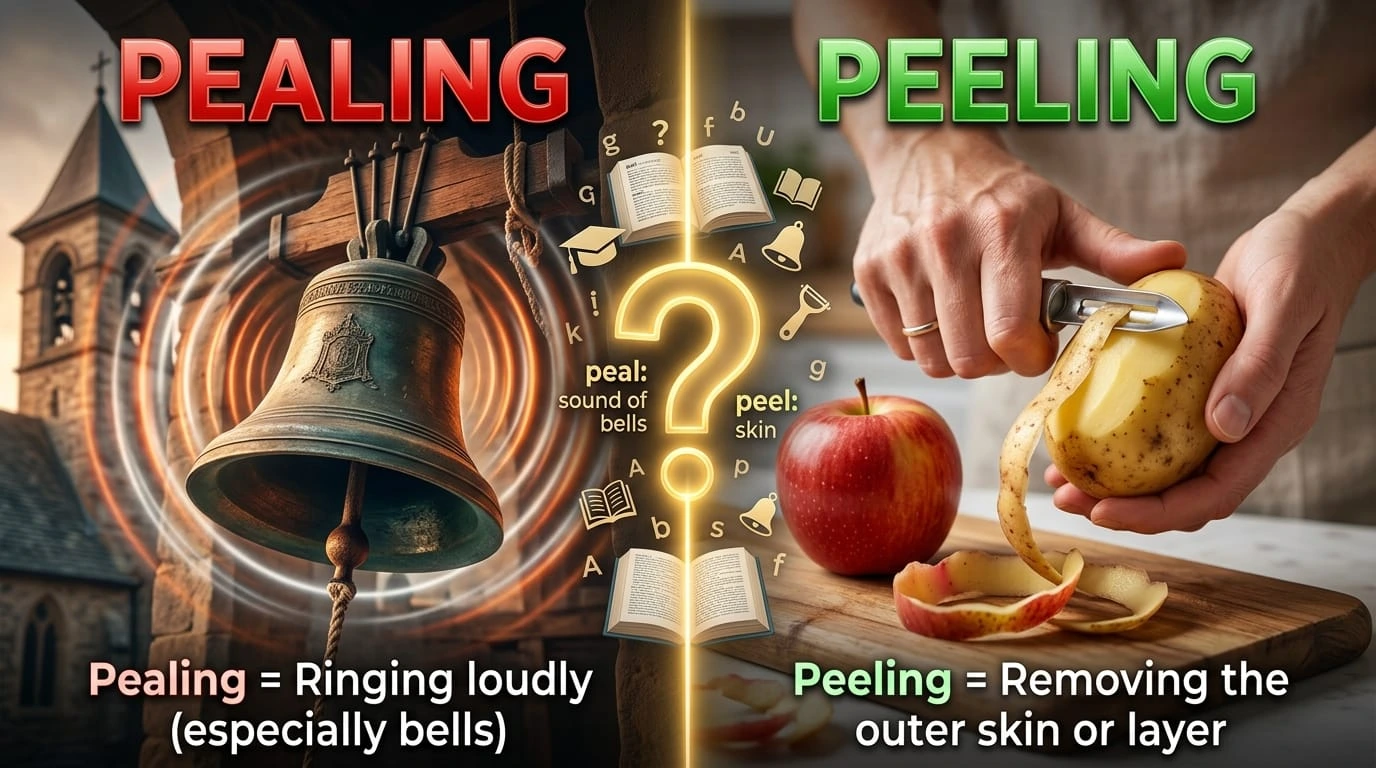
“Peeling means removing an outer layer, skin, or covering, while pealing means making a loud ringing sound, usually from bells.” ______________________________________________________________________________________________
Have you ever written a sentence and suddenly stopped because something did not look right? Maybe you typed pealing when talking about bananas, or perhaps you wrote peeling when describing church bells. It is a small difference, but it changes the meaning completely.
Many people search for pealing or peeling because the words sound almost the same. They look similar too. That creates confusion in writing. Students, bloggers, business professionals, and English learners often pause and wonder which spelling fits their sentence.
One word is connected with removing an outer layer. The other is linked with loud ringing sounds, especially bells. A single letter changes everything.
This confusion can appear in emails, social media posts, school assignments, articles, and everyday writing. Choosing the wrong word may confuse readers and make your message unclear.
This guide gives you a quick answer first. Then you will learn the meanings, origins, examples, common mistakes, and simple tips that help you choose the correct word every time.
Pealing or Peeling: Quick Answer
The answer is simple:
Peeling = removing skin, covering, or outer layers
Pealing = making a loud ringing sound, usually bells
Examples:
- She is peeling an orange.
- Church bells were pealing across the town.
Easy memory trick:
- Peeling → Peel a fruit
- Pealing → Peal of bells
The Origin of Pealing or Peeling
These words developed from different origins.
Peeling came from older words connected with removing outer coverings or skins.
Pealing came from words linked with loud repeated ringing sounds, especially church bells.
Although they sound alike, they grew from different language roots. That is why their meanings became different over time.
| Word | Original Meaning | Modern Meaning |
| Peeling | Remove outer covering | Taking off skin or layers |
| Pealing | Loud ringing | Bell or loud sounds |
British English vs American English Spelling
Unlike some English words, pealing and peeling do not change spelling between British and American English.
The same spellings work in both systems.
| British English | American English | Meaning |
| Peeling | Peeling | Removing a layer |
| Pealing | Pealing | Loud ringing sound |
Examples:
British English
- She was peeling potatoes.
- Bells were pealing in the church.
American English
- He started peeling apples.
- Bells kept pealing through the city.
Which Spelling Should You Use?
Your sentence meaning decides the choice.
Use peeling when talking about:
- Fruits
- Vegetables
- Paint
- Skin
- Layers
Examples:
- Peeling paint
- Peeling potatoes
Use pealing when talking about:
- Bells
- Ringing sounds
- Loud repeated sounds
Examples:
- Church bells pealing
- Bells pealing loudly
Audience advice:
US audience
Use standard meanings.
UK/Commonwealth audience
Use the same standard spellings.
Global audience
Choose based on context.
Common Mistakes with Pealing or Peeling
Many writers switch these words.
| Wrong Sentence | Correct Sentence |
| I am pealing an orange.❌ | I am peeling an orange.✅ |
| Bells were peeling all morning.❌ | Bells were pealing all morning.✅ |
| The wall started pealing.❌ | The wall started peeling.✅ |
| Church peeling filled the town.❌ | Church pealing filled the town.✅ |
Reasons these mistakes happen:
- Similar pronunciation
- Similar spelling
- Fast typing
- Auto-correct issues
Pealing or Peeling in Everyday Examples
Emails
Peeling
- We noticed peeling paint in the office.
Pealing
- Bells were pealing during the event.
News
Peeling
- Heat caused peeling paint on buildings.
Pealing
- Wedding bells were pealing through the town.
Social Media
Peeling
- I spent an hour peeling potatoes today.
Pealing
- Church bells are pealing outside my window.
Formal Writing
Peeling
- Inspectors found peeling surfaces in the structure.
Pealing
- Bells were pealing during the ceremony.
Pealing or Peeling: Google Trends & Usage Data
Search interest for pealing or peeling usually comes from grammar questions and writing mistakes.
Usage patterns show:
- Peeling appears much more often because people discuss food, paint, skin, and surfaces.
- Pealing appears less often and mainly relates to bells or sound descriptions.
- English learners frequently search for these terms.
Usage table:
| Word | Common Topics |
| Peeling | Food, paint, skin |
| Pealing | Bells, sound |
Pealing or Peeling Comparison Table
| Feature | Peeling | Pealing |
| Meaning | Removing outer layers | Loud ringing |
| Common Topic | Food and surfaces | Bells and sounds |
| Frequency | Very common | Less common |
| Example | Peeling apples | Pealing bells |
| Memory Tip | Peel fruit | Peal bells |
FAQs
1. What does peeling mean?
Peeling means removing an outer layer, skin, or covering.
2. What does pealing mean?
Pealing means making loud ringing sounds, usually bells.
3. Why do people confuse pealing and peeling?
People confuse them because they sound almost the same.
4. Which word is used for fruits?
Peeling is correct because fruit skin is removed.
5. Is pealing commonly used?
Pealing is less common because it mainly relates to bells.
6. Can peeling be used for paint?
Yes. Peeling paint is a very common phrase.
7. Which spelling is correct for church bells?
Pealing is correct because bells create ringing sounds.
Conclusion
The difference between pealing and peeling becomes easy when you focus on meaning. Peeling is used when removing an outer layer, skin, or covering. Pealing is used when describing loud ringing sounds, especially bells.
A simple trick can help you remember the difference. Think of peeling as removing the skin from fruits or vegetables. Think of pealing as the sound of bells ringing through the air. Small memory tricks can prevent mistakes and make writing easier.
Many writers confuse these words because they look and sound similar. Students, professionals, and content creators often stop to check which word is correct. Using the right word keeps your message clear and prevents misunderstandings.
Now you know exactly how to use pealing or peeling correctly. Save this guide and return whenever you need a quick reminder.
Devine or Divine: Correct Word Explained (2026)✅

As an English language enthusiast, I love diving into the tricky details of word differences and spelling variations. My mission is to explain confusing terms and make them accessible to everyone, helping readers to communicate with clarity and confidence.