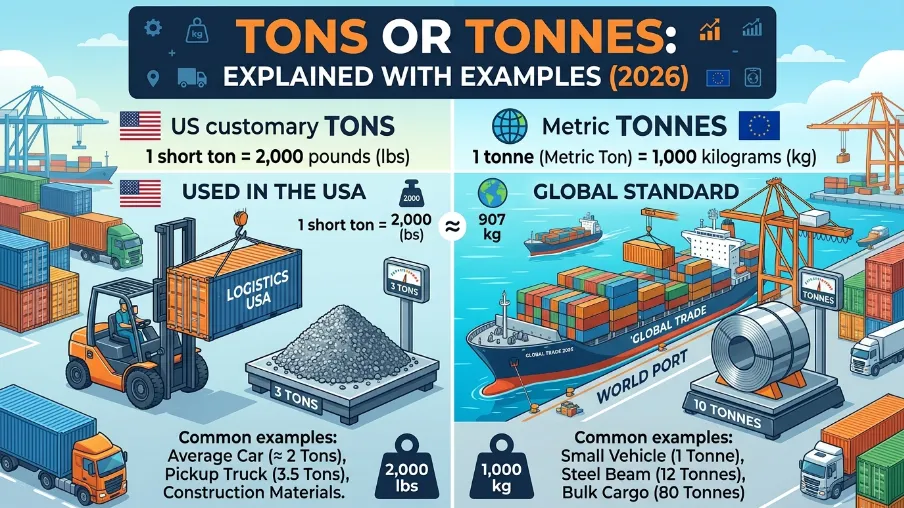
Tons” is mainly used in American English, while “tonnes” refers to the metric ton used internationally.
You read a news headline saying, “The ship carried 5,000 tonnes of steel.” Later, another article mentions “tons of material.” Now you stop and wonder: are tons and tonnes the same thing?
This confusion is very common because both words relate to weight and measurement. They sound almost identical, but they are not always equal in value. The difference mainly depends on:
- measurement systems
- country usage
- American vs international standards
People search for “tons or tonnes” because the words appear in:
- shipping
- construction
- science
- news reports
- school studies
- business documents
Using the wrong term can create confusion about actual weight, especially in technical or international writing.
The good news is that the difference becomes simple once you understand the measurement systems behind each word. In this guide, you’ll learn the meanings, origins, examples, comparison tables, common mistakes, and practical rules for using tons and tonnes correctly.
Tons or Tonnes – Quick Answer
👉 Tons = Usually American or imperial measurement 🇺🇸
👉 Tonnes = Metric measurement system 🌍
Simple Difference:
- 1 tonne = 1,000 kilograms
- 1 US ton ≈ 907 kilograms
Examples:
- The truck carried 10 tons of sand. ✅
- The factory produced 50 tonnes of steel. ✅
The Origin of Tons or Tonnes
Both words come from old measurement systems connected to heavy loads and trade.
Origin of “Ton”
The word “ton” developed from old terms related to:
- large casks
- heavy cargo
- shipping weights
Over time, different countries created different ton systems.
Origin of “Tonne”
“Tonne” was later introduced for:
👉 the metric system
It became the international standard in many countries using kilograms and metric measurements.
Today:
- tonne = metric ton
- based on kilograms
Tons vs Tonnes – Meaning Explained
What Does “Tons” Mean?
“Tons” usually refers to:
- US tons
- imperial tons
- large heavy weights
Types of Tons
| Type | Weight |
|---|---|
| US ton (short ton) | 2,000 pounds |
| Imperial ton (long ton) | 2,240 pounds |
Examples:
- The truck moved 20 tons of gravel.
- The bridge supports several tons of weight.
What Does “Tonnes” Mean?
“Tonnes” refers to:
👉 metric tons
Metric Definition:
1 tonne = 1,000 kilograms
Examples:
- The ship transported 8,000 tonnes of coal.
- The factory emits millions of tonnes of carbon yearly.
British English vs American English Usage
This difference strongly depends on region and measurement systems.
Main Rule:
👉 America commonly uses “tons”
👉 Many international systems use “tonnes”
Comparison Table
| Region | Common Usage |
|---|---|
| United States | Tons |
| United Kingdom | Tons and tonnes |
| Europe | Tonnes |
| International science | Tonnes |
Which One Should You Use?
The correct choice depends on:
- audience
- country
- measurement system
Use “Tons” When:
- Writing for US audiences
- Referring to pounds-based systems
- Using American measurements
Use “Tonnes” When:
- Using metric measurements
- Writing internationally
- Referring to kilograms
Simple Rule:
👉 Pounds system = tons
👉 Metric system = tonnes
Common Mistakes with Tons or Tonnes
Mistake 1
❌ Thinking tons and tonnes always weigh the same
✔ They are close, but not identical
Mistake 2
❌ Using “tons” in metric scientific writing
✔ “Tonnes” is preferred for metric systems
Mistake 3
❌ Ignoring regional differences
✔ Audience matters
Mistake 4
❌ Assuming tonne is just British spelling
✔ It represents a metric measurement
Tons or Tonnes in Everyday Examples
Construction
- The crane lifted several tons of concrete.
- The project used thousands of tonnes of steel.
Shipping
- Cargo ships carry millions of tonnes annually.
- Trucks transport tons of goods daily.
News Reports
- The storm dropped tons of snow.
- Factories released tonnes of emissions.
Social Media
- “I have tons of homework 😂”
- “The factory produces tonnes of material yearly.”
Tons or Tonnes – Google Trends & Usage Data
Search patterns show:
- “Tons” dominates in the United States
- “Tonnes” is more common internationally
- Environmental reports frequently use “tonnes”
Key Insight:
👉 Scientific and international writing often prefers “tonnes.”
Comparison Table: Tons vs Tonnes
| Feature | Tons | Tonnes |
|---|---|---|
| System | Imperial/US | Metric |
| Main regions | US | International |
| Weight basis | Pounds | Kilograms |
| Approximate value | 907–1016 kg | 1000 kg |
| Common in science | Less common | More common |
Why the Metric Tonne Matters Internationally
The metric system is widely used worldwide because it:
- creates standard measurements
- simplifies international trade
- improves scientific consistency
That’s why:
👉 “tonnes” appears frequently in:
- climate reports
- engineering
- global trade
- scientific studies
Tons vs Tonnes in Environmental Reports
Environmental discussions commonly use:
👉 tonnes
Examples:
- carbon tonnes
- emissions tonnes
- waste tonnes
This helps maintain international consistency.
Tons as Informal English
“Tons” is also used informally to mean:
👉 a large amount
Examples:
- I have tons of work today.
- She owns tons of books.
“Tonne” is rarely used this way informally.
Simple Trick to Remember the Difference
Easy Memory Rule
👉 Tonnes = metric 🌍
👉 Tons = American pounds 🇺🇸
Quick Reminder
If kilograms are involved:
✔ tonnes
If pounds are involved:
✔ tons
FAQs
1. What is the difference between tons and tonnes?
“Tons” usually refers to US or imperial systems, while “tonnes” refers to metric measurement.
2. Is a tonne bigger than a ton?
A metric tonne is slightly heavier than a US ton.
3. Which spelling is used internationally?
“Tonnes” is commonly used internationally in metric systems.
4. Does America use tonnes?
The United States mainly uses tons.
5. Is tonne just British spelling?
No. It specifically refers to the metric ton.
6. Why do climate reports use tonnes?
Because metric measurements are internationally standardized.
7. Can tons mean “a lot”?
Yes. Informally, “tons” means a large quantity.
Conclusion
The confusion between tons or tonnes happens because both words describe heavy weight measurements while sounding almost identical. However, they belong to different measurement systems.
“Tons” is commonly linked to American and imperial systems based on pounds, while “tonnes” belongs to the metric system and equals exactly 1,000 kilograms.
The best choice depends on:
- region
- audience
- measurement standards
- context
International, scientific, and environmental writing often prefers “tonnes,” while American writing usually uses “tons.”
The easiest way to remember is simple:
👉 Tons = pounds system 🇺🇸
👉 Tonnes = metric system 🌍
Understanding this difference helps avoid confusion in business, science, education, construction, shipping, and everyday communication.

Hi, I’m Evelyn Hartley. I love writing short stories that explore everyday life and the little emotions we all feel. I try to keep my words simple but meaningful, so readers can really connect with them.