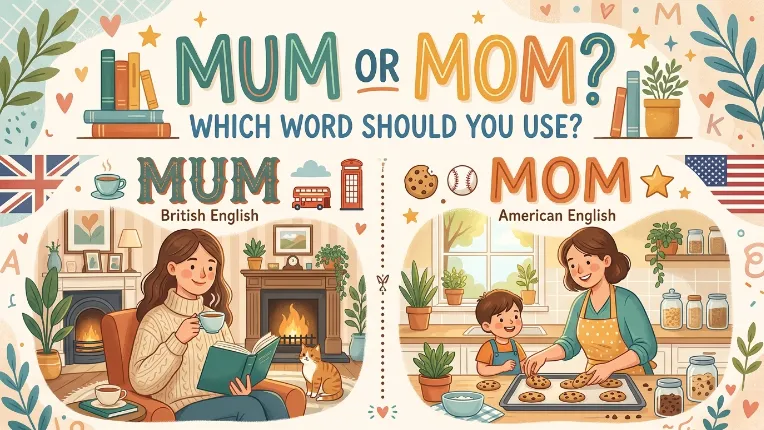
Both mum and mom mean “mother.” Mom is used mainly in American English, while mum is common in British English and many Commonwealth countries.
One afternoon, Ayesha watched an American movie with her younger brother. In one scene, a child ran into the kitchen and shouted, “Mom, where are my keys?” Ayesha smiled because in her home, everyone says mum instead.
That small difference might seem unimportant, but it often creates confusion for writers, students, and English learners. Many people wonder whether mum or mom is the correct word. When you read British books, you’ll see mum, but when you watch American TV shows, you’ll almost always hear mom.
This difference exists because English developed differently across regions. Over time, pronunciation and spelling changed slightly in various countries, creating variations like mum and mom.
Understanding when to use each word helps your writing match your audience. Whether you’re writing an email, a social media post, or a story, choosing the right version makes your language sound natural and culturally accurate.
In this guide, you’ll learn the meaning, history, spelling differences, and everyday usage of mum and mom, along with helpful examples and practical advice.
Mum or Mom – Quick Answer
Both mum and mom mean mother. The difference comes from regional English usage.
Examples:
- British English: “My mum is making dinner.”
- American English: “My mom is making dinner.”
Quick Comparison
| Word | Region | Example |
| Mum | British English | My mum called me today |
| Mom | American English | My mom called me today |
The meaning is exactly the same. Only the regional spelling and pronunciation differ.
The Origin of Mum or Mom
The words mum and mom come from early childhood speech.
Babies naturally produce sounds like ma, mama, and mum because these sounds are easy to pronounce. Over time, many languages adopted similar words for “mother.”
Here is the historical progression:
| Stage | Example |
| Baby speech | ma / mama |
| Early English | mam / mom |
| Regional English | mum / mom |
The pronunciation gradually changed depending on the accent and region.
In Britain, the pronunciation shifted toward “mum.”
In the United States, the pronunciation evolved into “mom.”
Because these words come from natural speech patterns, many languages have similar terms for mother.
British English vs American English Spelling
The main difference between mum and mom is regional.
Regional Comparison
| Region | Common Word |
| United States | Mom |
| United Kingdom | Mum |
| Canada | Mom |
| Australia | Mum |
| New Zealand | Mum |
Example Sentences
American English:
- My mom is visiting this weekend.
British English:
- My mum is visiting this weekend.
Both words refer to the same person, but the spelling matches the country’s language style.
Which Spelling Should You Use?
Choosing between mum and mom depends on your audience.
Use Mom when writing for:
- American readers
- American websites
- U.S. publications
Example:
- I called my mom after work.
Use Mum when writing for:
- British readers
- UK publications
- Australian or New Zealand audiences
Example:
- My mum helped me with homework.
Audience-Based Advice
| Audience | Best Choice |
| United States | Mom |
| United Kingdom | Mum |
| Australia / New Zealand | Mum |
| International audience | Either (depending on tone) |
If you’re writing for a global audience, either word works as long as you stay consistent.
Common Mistakes with Mum or Mom
Even though these words are simple, writers sometimes make small errors.
Mistake 1: Mixing Regional Styles
Incorrect:
- My mom lives in London and my mum lives in New York.
Correct:
- Keep spelling consistent unless describing different cultures.
Mistake 2: Using “Mom” in British Dialogue
Incorrect (British character):
- “Thanks, mom.”
Correct:
- “Thanks, mum.”
Matching the character’s location improves realism.
Mistake 3: Confusing “Mum” with Another Meaning
The word mum can also mean silent or secret.
Example:
- “Keep mum about the surprise party.”
In this context, mum does not mean mother.
Mum or Mom in Everyday Examples
These words appear frequently in daily communication.
Email Example
“Hi Mom, I’ll call you later tonight.”
Family Conversation
“My mum is cooking dinner tonight.”
News Example
“The young mom started a successful small business.”
Social Media Example
“Happy birthday to the best mum in the world ❤️”
School Writing Example
“My mom helps me with my homework.”
These examples show how the word changes depending on location and audience.
Mum or Mom – Google Trends & Usage Data
Search and language data show clear regional patterns.
Popular Search Patterns
| Search Term | Region |
| mom | United States |
| mum | United Kingdom |
| mom meaning | Global |
| mum meaning | Global |
Movies, television, and social media have made mom highly recognizable worldwide, but mum remains dominant in British English.
Usage by Country
| Country | Most Common Word |
| United States | Mom |
| United Kingdom | Mum |
| Canada | Mom |
| Australia | Mum |
This pattern shows how English evolves differently across regions.
Comparison Table: Mum vs Mom
| Feature | Mum | Mom |
| Meaning | Mother | Mother |
| Region | UK, Australia, NZ | United States |
| Pronunciation | “mum” | “mom” |
| Writing style | British English | American English |
| Example | My mum is home | My mom is home |
This table highlights that the difference is purely regional spelling and pronunciation.
FAQs
1. Is mum or mom correct?
Both are correct. Mom is used in American English, while mum is used in British English.
2. Why do Americans say mom?
American pronunciation evolved differently from British English, leading to the spelling mom.
3. Do British people say mom?
Most British speakers say mum, not mom.
4. Which spelling is more common worldwide?
Mom is widely recognized because of American media, but mum remains standard in many countries.
5. Is mum informal?
Yes. Both mum and mom are informal family words. The formal term is mother.
6. What do Australians say?
Australians usually say mum.
7. Can I use both spellings in writing?
Yes, but you should stay consistent with your chosen style.
Conclusion
The difference between mum and mom is not about correctness but about regional language style. Both words mean exactly the same thing: mother. The variation simply reflects how English developed in different parts of the world.
In the United States, mom is the standard word used in everyday speech, writing, media, and education. American movies, television shows, and books have also helped spread this spelling globally.
In contrast, mum remains the traditional and widely accepted form in the United Kingdom, Australia, and New Zealand. British literature, television, and everyday conversation strongly favor this version.
For writers, the most important rule is to match the word with your audience. If you’re writing for American readers, choose mom. If your audience is British or Australian, mum will sound more natural.
Ultimately, both words express the same idea: the caring and supportive role of a mother. By understanding the regional difference, you can write more clearly and communicate naturally with readers around the world.

Hi, I’m Liam Rivers, author at Engglory.com.
I’m an English grammar expert who simplifies spelling confusion and tricky grammar rules to help readers write and speak with confidence.