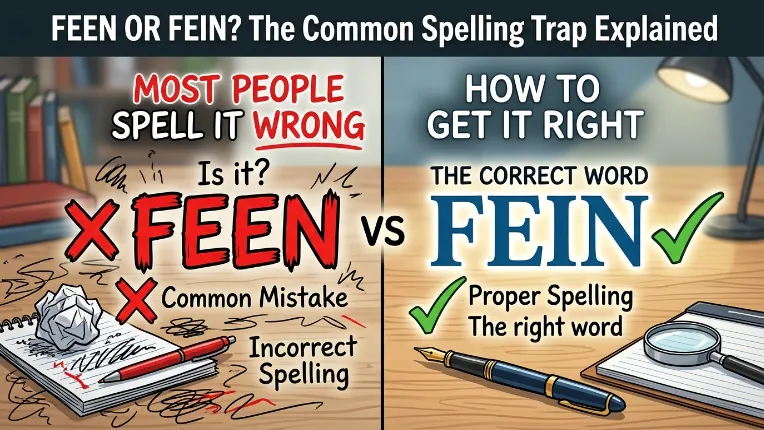
Snippet: “Fein” is the correct spelling in standard English usage, while “Feen” is usually a misspelling or appears rarely in other languages.
Imagine you’re typing a quick message or writing a comment online. You want to describe someone who is obsessed with something maybe a gaming fanatic or someone who loves coffee too much. You type the word “fein”, but suddenly pause and think: Is it actually “feen”?
This small spelling doubt is more common than you might think. Many people search “feen or fein” because they see both spellings online, especially on social media, gaming forums, and casual conversations. Sometimes people hear the word spoken and guess the spelling, which leads to confusion between the two versions.
In reality, the correct spelling in English contexts is usually “fiend,” though “fein” appears in slang and some names. The spelling “feen” often shows up as a typing mistake or phonetic spelling used informally on the internet.
People search for this keyword to confirm the correct spelling, understand why the confusion exists, and learn how to use the word properly in writing. This guide will explain the quick answer, the word’s origin, spelling differences, common mistakes, and everyday examples so you can confidently choose the right spelling.
Feen or Fein – Quick Answer
The correct and recognized spelling in most English contexts is “fein” when used in slang or names.
The spelling “feen” is usually a misspelling or informal phonetic version.
However, in standard English, the correct word people often mean is “fiend.”
Examples:
Correct:
- He is a gaming fein.
- The group Sinn Fein is an Irish political party.
Incorrect:
- He is a gaming feen.
Because the pronunciation is similar, people frequently spell it incorrectly as feen.
The Origin of Feen or Fein
The spelling “fein” has roots in the Irish language. It appears in the famous political organization Sinn Féin, which means “ourselves” or “we ourselves” in Irish Gaelic.
Over time, the word fein also appeared in slang contexts, especially in music culture and online communities. In many cases, people actually mean “fiend,” a word that originally described a demon or evil spirit but later came to mean someone extremely enthusiastic or addicted to something.
For example:
- Coffee fiend – someone who loves coffee
- Gaming fiend – someone obsessed with games
Because fiend is pronounced similarly to feen, people often write it the way they hear it.
British English vs American English Spelling
Unlike many English words, the confusion between feen and fein is not related to British or American spelling differences.
Both British and American English recognize fiend as the standard word.
Spelling Comparison Table
| Variant | Correct? | Usage |
| Fiend | ✔ Correct English word | US & UK |
| Fein | Limited usage | Names, slang |
| Feen | ✘ Incorrect | Misspelling |
Example Sentences
| Region | Example |
| American English | He’s a fitness fiend. |
| British English | She’s a chocolate fiend. |
Both regions follow the same spelling rule.
Which Spelling Should You Use?(Fein or Feen)
The best spelling depends on what you actually mean.
In standard English writing
Use fiend.
Example:
- He is a technology fiend.
When referring to names or Irish terms
Use fein.
Example:
- The political party Sinn Fein.
In casual internet slang
Some people write feen, but it is informal and not recommended for professional writing.
For blogs, academic writing, and professional communication, fiend is the safest choice.
Common Mistakes with Feen or Fein
Many writers confuse these spellings because they rely on pronunciation.
1. Writing “feen” instead of “fiend”
Incorrect:
- He is a music feen.
Correct:
- He is a music fiend.
2. Confusing slang with correct spelling
People sometimes copy slang from social media without checking dictionaries.
3. Misspelling historical or political names
Incorrect:
- Sinn Feen
Correct:
- Sinn Fein
4. Phonetic typing
When people type quickly, they spell words exactly how they sound.
Feen or Fein in Everyday Examples
Understanding real-life usage helps clarify the difference.
In Emails
Incorrect:
- I’m a coffee feen these days.
Correct:
- I’m a coffee fiend these days.
In News Articles
Correct example:
- The party Sinn Fein gained more votes in the election.
On Social Media
Example:
- I’m a movie fiend this weekend!
In Formal Writing
Correct example:
- The detective tracked down a dangerous criminal described as a violent fiend.
Feen or Fein – Google Trends & Usage Data
Search data shows that many users type “feen” when they actually mean “fiend.”
Usage Patterns
| Word | Popularity | Context |
| Fiend | Very high | Standard English |
| Fein | Medium | Names, politics |
| Feen | Low | Misspelling searches |
Country Interest
| Country | Common Context |
| United States | slang / fiend |
| United Kingdom | literature / fiend |
| Ireland | Sinn Fein |
| Canada | general English |
Most searches for “feen” are correction searches where users want to know the proper spelling.
Comparison Table: Feen vs Fein
| Feature | Feen | Fein |
| Dictionary word | No | Rare |
| Correct spelling | No | Sometimes |
| Common meaning | None | Irish term or name |
| Standard English alternative | Fiend | Fiend |
This comparison shows that feen is usually incorrect, while fein appears mainly in names or specific contexts.
FAQs
1. Is “feen” a real word?
Not in standard English. It usually appears as a misspelling of fiend.
2. What does “fein” mean?
It appears in Irish phrases such as Sinn Fein, meaning “ourselves.”
3. Why do people spell fiend as feen?
Because the pronunciation is similar, many people write it the way it sounds.
4. Which spelling should I use in writing?
Use fiend for standard English writing.
5. Is feen used in slang?
Yes, some internet slang uses feen, but it is not considered correct spelling.
6. Is fein used in politics?
Yes, especially in the name Sinn Fein, an Irish political party.
7. Is feen accepted in dictionaries?
No, most major dictionaries do not recognize it as a standard word.
Conclusion
The confusion between feen or fein mostly comes from pronunciation and informal internet usage. When people hear the word spoken, they often guess the spelling and end up writing feen, which is usually incorrect.
In standard English, the word people typically mean is fiend, which describes someone extremely enthusiastic or obsessed with something. This word has existed in English for centuries and appears in literature, news articles, and everyday conversations.
The spelling fein, on the other hand, mainly appears in Irish phrases and names, such as Sinn Fein. It is not commonly used as a regular English word.
Understanding these differences helps you avoid spelling mistakes and communicate more clearly. Whether you are writing emails, social media posts, or professional content, using the correct spelling improves credibility and readability.
The key takeaway is simple: avoid “feen,” use “fiend” for standard English, and use “fein” only in specific names or contexts.

Hi, I’m Evelyn Hartley. I love writing short stories that explore everyday life and the little emotions we all feel. I try to keep my words simple but meaningful, so readers can really connect with them.