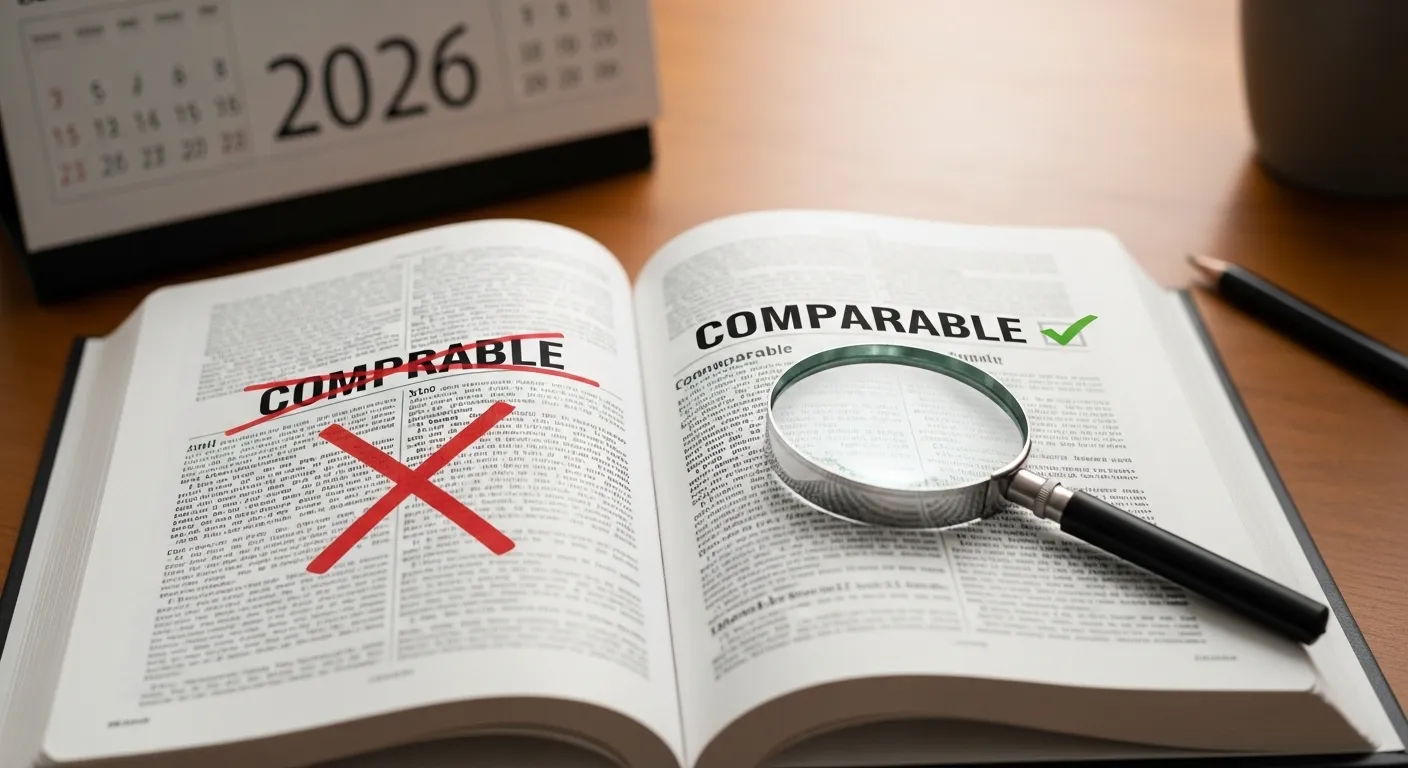
Comparable is the correct spelling. “Comprable” is a common misspelling and is not a real English word.
Have you ever typed “comprable” and seen a red underline? You are not alone. Many people search for “comprable or comparable” because they are unsure which spelling is correct. The confusion happens because English spelling can be tricky. When we speak fast, we often drop sounds. This makes “comparable” sound like “comprable.”
People want a quick answer. They also want to know why the mistake happens. Is it British English? Is it American English? Or is it simply wrong? This article gives you a clear and simple guide. You will learn the correct spelling, the history of the word, common mistakes, and how to use it in daily writing.
By the end, you will never confuse these two spellings again. Let’s clear it up once and for all.
Comprable or Comparable – Quick Answer
The correct spelling is comparable.
❌ Comprable – Incorrect
✅ Comparable – Correct
Comparable means “able to be compared” or “similar in some way.”
Examples:
- This phone is comparable to the latest model.
- The two houses are comparable in price.
- Her skills are comparable to a senior manager’s skills.
“Comprable” is just a spelling mistake. It is not accepted in any dictionary.
The Origin of Comparable
The word comparable comes from the Latin word comparare, which means “to compare.” It entered English in the 15th century.
The word is formed like this:
- Compare (verb)
- able (suffix meaning “capable of”)
- = Comparable (able to be compared)
So the full word keeps the root compare. When people write “comprable,” they remove the “a” sound by mistake. This happens because of fast pronunciation.
Over time, English kept the full spelling. There has never been a correct version spelled “comprable.”
British English vs American English Spelling
Some English words change spelling between the US and the UK. For example:
| American English | British English |
| Color | Colour |
| Organize | Organise |
| Center | Centre |
But comparable does NOT change spelling.
| Version | US English | UK English | Correct? |
| Comparable | ✔ | ✔ | Yes |
| Comprable | ✖ | ✖ | No |
There is no British version of “comprable.” It is incorrect everywhere.
The only small difference is pronunciation:
- US: KOM-per-uh-bul
- UK: KOM-pruh-bul
Even though pronunciation differs, spelling stays the same.
Which Spelling Should You Use?
You should always use comparable, no matter where your audience lives.
If Your Audience is in the US:
Use comparable in business reports, emails, and academic writing.
If Your Audience is in the UK or Commonwealth:
Still use comparable. There is no alternative spelling.
If You Write for a Global Audience:
Choose comparable. It is correct worldwide.
Professional tip: Always double-check spelling in formal writing. A small error like “comprable” can hurt your credibility.
Common Mistakes with Comprable or Comparable
Here are frequent errors people make:
1. Dropping the “a”
❌ Comprable
✅ Comparable
People skip the “a” after “p” because they do not hear it clearly.
2. Confusing It with “Compareable”
❌ Compareable
✅ Comparable
The correct spelling removes the extra “e.”
3. Wrong Pronunciation Leading to Wrong Spelling
Fast speech can hide letters. But spelling must follow grammar rules, not sound.
4. Using It Incorrectly in a Sentence
Wrong: These products are very comparable than others.
Correct: These products are comparable to others.
Remember: Use “comparable to,” not “comparable than.”
Comparable in Everyday Examples
Let’s see how this word works in real life.
In Emails:
“The price you offered is comparable to our competitor’s rate.”
In News:
“The new policy is comparable to last year’s reform.”
On Social Media:
“This camera quality is comparable to a DSLR!”
In Academic Writing:
“The results were comparable to previous studies.”
In Business Reports:
“Our growth this year is comparable to 2024 performance.”
In all cases, the spelling stays the same.
Comparable – Google Trends & Usage Data
Search data shows that many users type “comprable or comparable” each month. Most of these searches come from:
- United States
- India
- United Kingdom
- Pakistan
The reason is simple. The word is long and easy to misspell.
Google auto-correct usually changes “comprable” to “comparable.” This proves that “comprable” is not recognized as a valid word.
In formal databases, dictionaries, and corpora, only comparable appears as the correct form.
Comparison Table: Comprable vs Comparable
| Feature | Comprable | Comparable |
| Is it a real word? | No | Yes |
| Found in dictionary? | No | Yes |
| Used in formal writing? | No | Yes |
| Accepted in US English? | No | Yes |
| Accepted in UK English? | No | Yes |
| Meaning | None | Able to be compared |
The table makes it clear: only one spelling is correct.
FAQs
1. Is “comprable” ever correct?
No. It is always incorrect.
2. Why do people spell it “comprable”?
Because the middle “a” sound is soft and easy to miss.
3. Is “comparable” American or British?
It is correct in both American and British English.
4. How do you pronounce “comparable”?
US: KOM-per-uh-bul
UK: KOM-pruh-bul
5. What does “comparable” mean?
It means “similar” or “able to be compared.”
6. Can I use “comparable with”?
Sometimes in British English, yes. But “comparable to” is more common.
7. Is “compareable” correct?
No. The correct spelling is “comparable.”
Conclusion
Spelling mistakes are common in English. But some errors are easy to fix once you know the rule. In the case of “comprable or comparable,” the answer is clear. The correct spelling is comparable. The word comes from “compare” plus “able,” meaning “able to be compared.”
There is no British or American difference in spelling. Both use “comparable.” The confusion happens because of pronunciation. When people speak quickly, the middle vowel sound becomes weak. This leads to the wrong spelling.
If you want to sound professional in emails, academic papers, or business writing, always double-check your spelling. Small errors can reduce trust. Now that you understand the rule, you can write with confidence.
Next time you see the red underline under “comprable,” you will know exactly why.
Address or Adress: Which Spelling Is Correct? Guide For 2026✅

Hi, I’m Liam Rivers, author at Engglory.com.
I’m an English grammar expert who simplifies spelling confusion and tricky grammar rules to help readers write and speak with confidence.