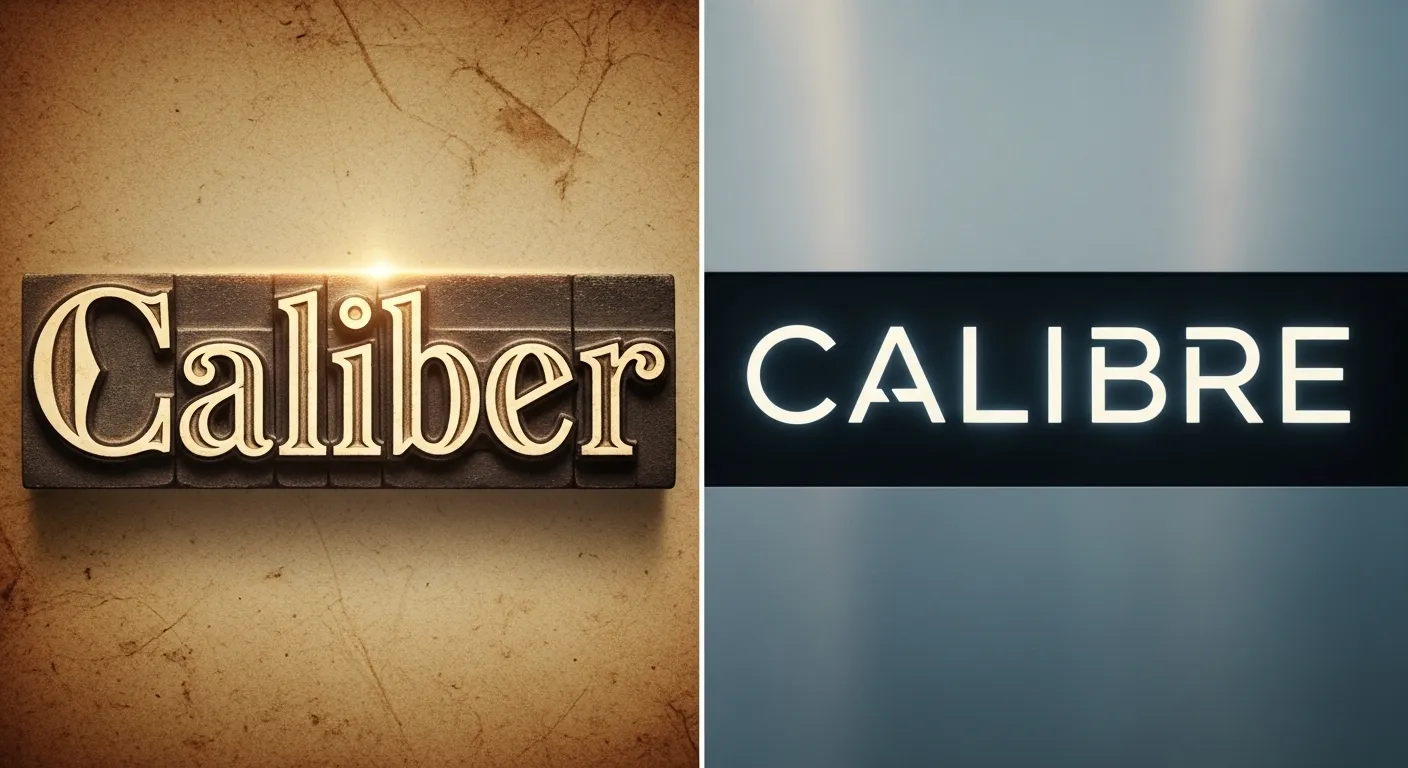
Caliber is American English, calibre is British English.Both are correct depending on your audience.
An international award ceremony printed its event brochure in two versions. The American edition praised “leaders of the highest caliber.” The British edition honored “professionals of exceptional calibre.” Guests compared the copies and noticed the spelling difference. Some assumed one version had a typo. Others thought it was a stylistic choice.
This is exactly why many writers search for “caliber or calibre.” The words look different but sound the same. The meaning stays identical, yet the spelling shifts depending on location. For students, bloggers, businesses, and content creators working with global audiences, choosing the correct form matters.
English spelling has evolved over centuries, especially between American and British usage. Understanding these variations helps maintain professionalism and clarity. This guide explains the meaning, origin, regional differences, usage rules, real-world examples, search trends, and expert advice so you can confidently choose the right spelling every time.
Caliber or Calibre – Quick Answer
Both spellings are correct. The difference is regional.
- Caliber → American English
- Calibre → British English
The meaning remains the same in both forms.
Meaning
The word refers to:
- The level of quality of a person or thing.
- The internal diameter of a gun barrel.
Examples
Quality context:
- She is a writer of high caliber. (US)
- She is a writer of high calibre. (UK)
Measurement context:
- The rifle has a small caliber. (US)
- The rifle has a small calibre. (UK)
The spelling does not change the meaning.
The Origin of Caliber and Calibre
The word comes from the French term calibre, which originally referred to the diameter of a firearm barrel. It entered English during the 16th century. At that time, English spelling was not fully standardized, so variations naturally appeared.
In the early 19th century, American lexicographer Noah Webster simplified many English spellings to create distinctions between American and British English. As part of these reforms:
- British English kept calibre, following French influence.
- American English adopted caliber, removing the “re” ending in favor of “er.”
This pattern appears in many other word pairs, such as:
- Centre → Center
- Theatre → Theater
- Fibre → Fiber
Despite spelling differences, the pronunciation and definition remained unchanged.
British English vs American English Spelling
This spelling difference follows a common rule. Words ending in “-re” in British English often change to “-er” in American English.
Here is a comparison:
| American English | British English |
| Center | Centre |
| Fiber | Fibre |
| Theater | Theatre |
| Caliber | Calibre |
Now let’s focus directly on the keyword:
| Spelling | United States | United Kingdom | Meaning |
| Caliber | Standard | Rare | Quality or diameter |
| Calibre | Rare | Standard | Quality or diameter |
There is no difference in grammar or meaning. The change only reflects regional spelling preference.
Which Spelling Should You Use?
Choosing the correct spelling depends on your audience.
If Your Audience Is in the United States
Use caliber.
This matches American spelling standards used in schools, universities, newspapers, and business writing.
Example:
- The company hires employees of the highest caliber.
If Your Audience Is in the United Kingdom
Use calibre.
British publications and institutions follow this spelling.
Example:
- The university attracts students of exceptional calibre.
If Your Audience Is International
Pick one spelling based on your primary market and stay consistent. Consistency is more important than preference.
Professional advice:
- Never mix both spellings in one document.
- Follow your organization’s style guide.
- Match spelling with other regional forms (color/colour, center/centre).
Common Mistakes with Caliber or Calibre
1. Mixing Spellings in the Same Text
Incorrect:
- The athlete is of high caliber and shows rare calibre talent.
Choose one version and stick with it.
2. Assuming Different Meanings
Both spellings mean exactly the same thing. There is no difference in definition.
3. Confusing with “Caliper”
“Caliper” refers to a measuring tool. It is unrelated.
Correct:
- The mechanic used a caliper to measure width.
Incorrect:
- The mechanic used a caliber to measure width.
4. Wrong Plural Form
Plural forms depend on spelling:
- Calibers (US)
- Calibres (UK)
Caliber or Calibre in Everyday Examples
In Business Writing
- We aim to deliver products of the highest caliber.
- We aim to deliver products of the highest calibre.
In Education
- The institution attracts high-caliber students.
- The institution attracts high-calibre students.
In Military Context
- The firearm is .22 caliber.
- The firearm is .22 calibre.
In Media Reviews
- A performance of such high caliber impressed critics.
The meaning remains consistent across all uses.
Caliber or Calibre – Google Trends & Usage Data
Search data shows a clear regional split.
In the United States:
- “Caliber” dominates search results and publications.
In the United Kingdom and Australia:
- “Calibre” is far more common.
Globally:
- “Caliber” appears slightly more often online due to the high volume of American digital content.
Many users search “caliber or calibre” because they want to avoid spelling errors in academic essays, business reports, or international communication.
Search engines do not treat one as incorrect. Instead, results adjust based on user location.
Comparison Table: Caliber vs Calibre
| Feature | Caliber | Calibre |
| Meaning | Same | Same |
| Region | US | UK |
| Pronunciation | Same | Same |
| Plural Form | Calibers | Calibres |
| Professional Use | Yes | Yes |
| Grammar Difference | None | None |
This table confirms that the difference is purely regional.
FAQs
1. Is caliber incorrect in the UK?
It is understood, but “calibre” is preferred.
2. Is calibre wrong in the US?
It is not wrong, but it is uncommon.
3. Do they have different meanings?
No, both refer to quality or diameter.
4. Which spelling should students use?
Use the version required by your school’s regional style.
5. Is this difference similar to color and colour?
Yes, it follows the same American vs British spelling pattern.
6. Does pronunciation change?
No, both are pronounced the same.
7. Which spelling is better for SEO?
Choose the version that matches your target audience’s location.
Conclusion
The debate between caliber or calibre is not about correctness. Both spellings are accurate and accepted in modern English. The only difference lies in regional preference. American English uses caliber, while British English uses calibre.
Understanding this distinction helps you write clearly and professionally. When your audience is American, use “caliber.” When your audience is British or part of the Commonwealth, use “calibre.” For international communication, consistency is essential.
English spelling differences reflect the language’s history and evolution. Recognizing these patterns allows you to adapt your writing style based on context and readership. With this knowledge, you can confidently choose the correct form and maintain credibility in every document you produce.
Read More 👇
Comprable or Comparable: Correct Spelling Guide For 2026✅

Hi, I’m Evelyn Hartley. I love writing short stories that explore everyday life and the little emotions we all feel. I try to keep my words simple but meaningful, so readers can really connect with them.